When Words Feel Heavy: How Emojis Bridge the Gap in Digital Conversations

Mar 21,2026
You know the feeling. You type out a message, hit send, and then… nothing. The little ‘Delivered’ notification stares back at you, and a quiet panic starts to creep in. Did they take it the wrong way? Did it sound too blunt? Too eager? Too indifferent? In the absence of a voice, a laugh, or even a sigh, our words can feel strangely weighty and open to interpretation.
This is the emotional uncertainty of digital conversation. We’re communicating more than ever, yet we’ve stripped away the very tools—tone, facial expression, body language—that humans have relied on for millennia to understand each other. What’s left is a vacuum, and into that vacuum rushes doubt.
It’s in these moments that the humble emoji becomes more than just a cute picture. It becomes a lifeline.
The Heaviness of the Unsaid
Think about a simple “Okay.” On its own, it’s neutral. But in a text, it can feel like a door slamming shut. Now think about “Okay 😊” or “Okay 👍”. Suddenly, the intent is clear. The first is agreeable and friendly; the second is affirmative and supportive. The emoji doesn’t replace the word—it contextualizes it. It tells the person on the other end how to feel about the word you just sent.
This is especially crucial in situations where silence feels heavier than sending something. A friend shares bad news, and you’re typing out a long, heartfelt response. But it’s taking time. Instead of letting the silence stretch into something awkward or uncaring, a simple ❤️ or 🫂 can say, “I’m here. I’m listening. I care,” buying you the emotional space to find the right words.
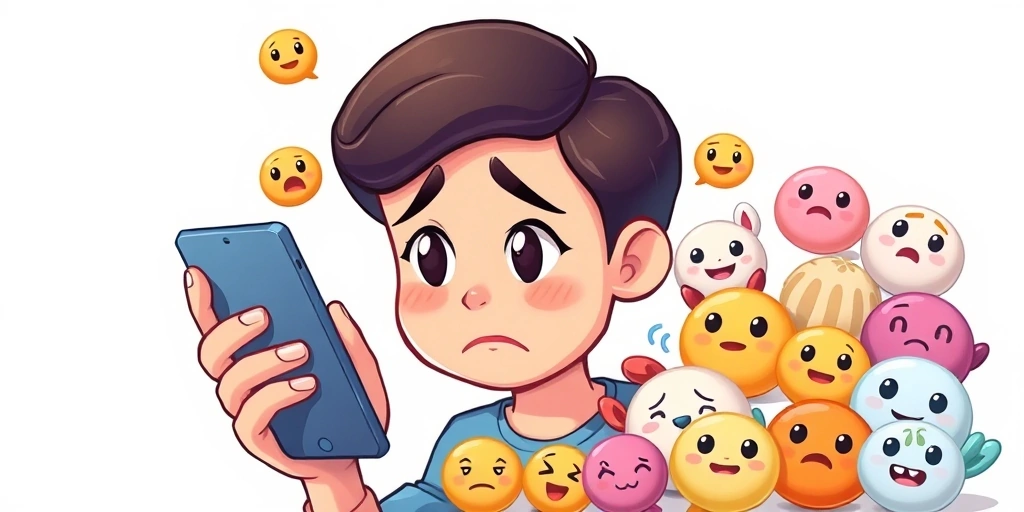
It’s a digital nod of understanding. A virtual pat on the back. We use these small gestures constantly in face-to-face talk without a second thought. Online, emojis are how we replicate that essential, reassuring human feedback.
Softening the Edges
Requests and feedback are another minefield. “Can you send me that report?” feels like a demand. “Can you send me that report? 🙏” feels like a polite request. “This needs more work” can sting. “This needs more work 💪” frames it as a collaborative challenge. The emoji acts as a tone softener, wrapping potentially harsh text in a layer of emotional intent.
This isn’t about being less direct; it’s about being more compassionate. It’s recognizing that the person reading your words can’t see your hopeful smile or your apologetic shrug. You have to build that context into the message itself. For more on how emojis save us from those awkward digital pauses, you might find this article really insightful.
More Than Just Decoration
Some might dismiss emojis as frivolous or unprofessional, but that’s missing the point. In our daily personal and increasingly professional digital lives, they serve a critical function of emotional labor. They do the work of clarifying, reassuring, and connecting that was once handled by our voices and faces.
They help us navigate the subtle social cues we risk losing in translation. A winking emoji 😉 can turn a sarcastic comment into a shared joke. A thinking face 🤔 can show you’re considering a point seriously. A single tear 😢 can express a complex mix of sadness and empathy that might take a paragraph to explain.
It’s fascinating to see how a simple icon can become a lifeline when conversations go quiet, a topic explored in depth here.
The Gift of Clarity
At its heart, using an emoji in moments of uncertainty is a gift of clarity. It’s you saying to the other person, “I don’t want you to wonder how I feel about this. I want you to know.” It’s a small act of emotional generosity that cuts through the ambiguity of plain text.
So the next time you pause before hitting send, worried about how your words might land, don’t be afraid to add that little symbol. That smiley, that heart, that thumbs-up. It’s not childish. It’s human. It’s you, reaching through the screen to ensure the person you’re talking to feels seen, understood, and connected—exactly as you intend.
For more thoughts on using emojis in different situations, check out our broader collection on emoji and situation.
📒 Related Blogs
More...Beyond the Text: How Emojis Shape What We Really Think
The Quiet Confidence of Emojis: When Words Aren't Enough
Unlocking the Secret Language: How Emoji Pairs Transform Your Digital Conversations
The Tiny Gesture That Makes Work Chats Feel Human
The Playful Nudge: How Emojis Turn Casual Chats into Fun, Lighthearted Moments
The Emoji Enigma: How Those Little Icons Accidentally Confuse Our Casual Chats