How Emojis Evolve: The Secret Life of Our Favorite Digital Symbols

Feb 11,2026
Think about the last time you sent a skull emoji. Chances are, you weren't talking about an actual skull. You were probably laughing so hard you felt like you were dying. This shift—from a symbol of mortality to a marker of extreme humor—didn't happen in a dictionary. It happened in group chats, on Twitter threads, and in TikTok comments, one use at a time.
This is the fascinating, organic process of emoji evolution. Emojis are not handed down with fixed meanings. Instead, they are blank canvases that we, as a digital society, paint with new significance through sheer repetition and shared context. They are a perfect reflection of our changing online culture, evolving right alongside our inside jokes, social movements, and collective anxieties.
The Power of the Crowd
No single person decides that the pleading face emoji will become the universal symbol for 'please' or 'I'm begging you.' It emerges. Someone uses it in a vulnerable, earnest way. Others see it, understand the nuance, and replicate it. Before long, a new layer of meaning is cemented through billions of tiny, uncoordinated acts of communication. The platform itself is just the stage; the users are the playwrights.
This is especially true for emojis that lack a clear, literal object. The rolling eyes face didn't need to evolve much—its meaning was visually obvious. But an emoji like the rocket? Its journey from representing literal space travel to symbolizing rapid growth, success, or 'blasting off' is a pure product of online business and startup culture.
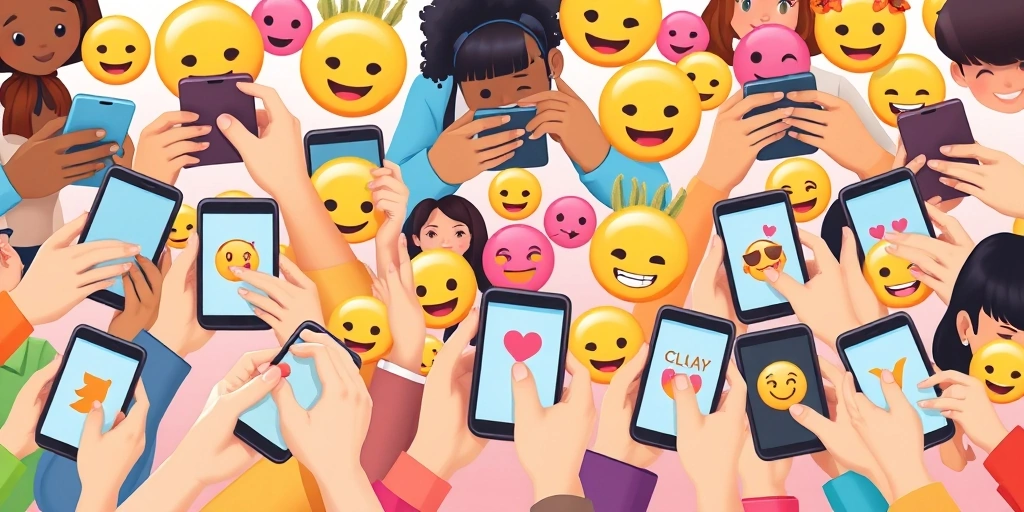
Memes are perhaps the most powerful engine of this change. A viral video format or a popular audio clip can permanently attach a new connotation to an emoji. The emoji becomes a shorthand for the entire meme, a way to tap into a shared cultural knowledge without saying a word. It's a badge of belonging, signaling 'I was there, I get the joke.'
Emojis as Cultural Barometers
Look closely at how emojis are used, and you can see the broader themes of our time reflected back. The growing use of plant and leaf emojis in bios didn't just happen; it coincided with a massive surge in interest in wellness, sustainability, and houseplants. The raised fist emoji has been adopted and adapted by countless social justice movements, its meaning deepening with each use.
Even negative spaces create new meanings. The absence of certain emojis, or the fight for more inclusive ones, is itself a cultural statement. The push for skin tone modifiers, gender-inclusive family emojis, and symbols representing disabilities showed how our digital language needed to catch up to our real-world values. The evolution isn't always about fun and games; sometimes it's about representation and identity. You can explore more about how different generations use this symbolic language in our article on the secret language of emojis.
When Context is Everything
This fluidity means context is king. Sending a fire emoji to a friend about their new haircut means 'amazing.' Sending it to a colleague reporting a literal office fire is a catastrophic failure of communication. We are constantly, intuitively, reading the room—even when the room is a text box.
This is why emoji evolution can sometimes lead to generational divides or awkward misunderstandings. What is a sincere expression of gratitude to one person might be read as passive-aggressive sarcasm to another, depending on the subcultures they inhabit online. The peach emoji will forever be caught in a tug-of-war between fruit lovers and everyone else on the internet.
Embracing the Fluidity
Rather than seeing this change as chaotic, we can see it as a sign of a vibrant, living language. Emojis work because they are flexible. They allow for tone, emotion, and subtext in a medium that is often devoid of it. They let us be playful, sincere, ironic, and supportive, often with a single character.
The next time you go to use an emoji, take a second to think about its journey. That simple yellow face has likely traveled through countless memes, heartfelt conversations, and viral trends to arrive in your keyboard with its current meaning. It's a tiny artifact of our shared digital experience. To see how this plays out with the latest viral trends, check out our thoughts on how emojis evolve with internet trends.
So, keep using them, keep bending them, and keep giving them new life. Our online culture is a conversation, and emojis are some of its most dynamic and expressive words. They remind us that language isn't owned by institutions; it's built by people, one message at a time.
📒 Related Blogs
More...Emojis & Mental Health: Expressing Emotions Digitally for Well-being
How Emojis Keep Your Slack Messages Professional and Friendly
How Emojis Steer the Conversation in Fast-Paced Chats
The Slow Fade: How Emojis Quietly Show Our Disappointment
The Unspoken Shield: How Emojis Absorb Social Tension in Delicate Moments
The Quiet Sigh: How Emojis Express Disappointment When Words Feel Too Risky