How Emojis Find New Meaning in Every Online Space

Jan 23,2026
Think about the last time you sent a fire emoji. Was it to compliment a friend's new haircut on Instagram, or to acknowledge a brilliant point in a work Slack channel? The same little pictogram, but the feeling behind it shifts completely depending on where you are and who you're talking to. This is the magic of emojis in our digital age: they aren't static symbols with fixed definitions. Instead, they're like linguistic seeds, dropped into the soil of different online spaces, where they grow and adapt to the unique cultural context of each platform.
This process starts with simple repetition. Someone uses an emoji in a novel way—maybe the skull emoji for something hilariously funny instead of literal death. It catches on with a few friends in a group chat. From there, it might leak onto a public Twitter thread or a TikTok comment section. With each share, each reuse, the new meaning gets reinforced. It's a grassroots, bottom-up evolution of language happening at lightning speed. Before you know it, an entire community has a shared understanding that the pleading face isn't just about begging; it's the universal sign for 'I'm cringing so hard right now.'
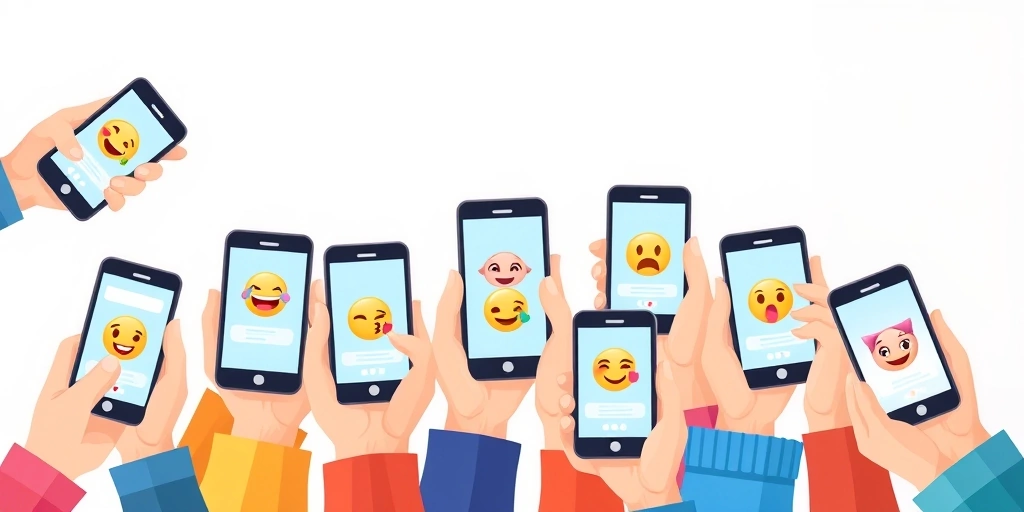
The Platform as a Playground
Each major social platform acts as its own cultural playground with distinct norms. The emoji language on Twitter, fast-paced and news-driven, is different from the aesthetic, curated world of Instagram, which is again worlds apart from the intimate, friend-focused vibe of Snapchat or Discord.
Take the humble crying-laughing emoji. On Facebook, it might still be used for genuine, hearty laughter. On Twitter, it's often layered with irony or used to signal that something is so absurd it's funny. In some younger, meme-savvy circles on TikTok or Discord, it can even be seen as a bit outdated, replaced by more niche or absurdist reactions. The emoji didn't change; the cultural context around it did. The platform's demographics, communication style, and inside jokes create a pressure that shapes how symbols are interpreted. You can read more about how these internet trends shape our digital emotions in our piece on the secret life of emojis.
Adoption and the Feeling of Belonging
Using an emoji in the 'correct' new way for a specific platform isn't just about communication—it's about signaling belonging. When you use the 'brain exploding' meme format with the right sequence of emojis on Reddit, you're not just expressing amazement; you're showing you understand the subculture's shorthand. You're in the club. This adoption process is deeply social. We learn by watching others, by seeing what gets likes and laughs, and by subtly mimicking the linguistic patterns of the groups we want to be part of.
This is why you might feel a slight hesitation before using a new emoji trend. It's a tiny social risk. Will people get it? Will it land correctly, or will it mark you as an outsider? This micro-level negotiation is how cultural context is built and maintained. It's also a powerful way that emojis can bridge or highlight generational gaps within online communities.
The lifecycle of these adapted meanings is fascinating. Some become so entrenched they feel universal. Others are fleeting, burning bright for a season in a particular app before fading away, leaving older users wondering when the peach stopped being just a peach. There's no central committee deciding this; it's a constant, organic churn of trial, error, repetition, and adoption. The platforms provide the arena, but the users are the ones playing the game, constantly remixing the visual language at their fingertips to fit their immediate emotional and social needs. It's a reminder that our most human impulses—to connect, to belong, to express nuance—find a way, even within the constraints of a standardized emoji keyboard.
📒 Related Blogs
More...When Emojis Backfire: The Unseen Complication of Digital Tone
The Unspoken Rescue: How Emojis Save Us From Socially Awkward Moments
The Evolution of Visual Language: From Ancient Hieroglyphs to Modern Emojis
The Emoji Revolution: Transforming Marketing & Branding Strategies
The Unsung Heroes of Work Chat: How Emojis Make Your Slack Messages Land Perfectly
Emoji Across Cultures: Global Meanings & Interpretations Explained