How Emojis Quietly Change Meaning With Us

Feb 13,2026
Think about the last time you used a simple thumbs-up or a crying-laughing face. The meaning felt instant, right? But that meaning wasn't always set in stone. Emojis, much like the words we speak, are living parts of our language. They don't just appear with a fixed definition; they grow, shift, and adapt through the way millions of people use them every day. This isn't a top-down process dictated by tech companies, but a grassroots evolution driven by culture itself.
This constant adaptation is what keeps emojis relevant. A symbol designed for one purpose can be repurposed by a community to express something entirely different, often more nuanced than its original intent. It's a fascinating dance between design and usage, where the users ultimately write the dictionary.
The Unwritten Rules of Emoji Adoption
So how does an emoji's meaning actually change? It rarely happens overnight. Instead, it's a slow, organic process. Often, it starts within specific online communities—gaming forums, fan groups, or social media platforms. A particular emoji gets used in a new, context-specific way that resonates. Maybe it's used ironically, or to represent a shared inside joke. If that usage is powerful enough, it leaks out of its original circle.
From there, viral moments—a famous tweet, a meme format, a popular video—can act as accelerants, broadcasting the new meaning to a global audience. Suddenly, the emoji carries the weight of that shared cultural moment. Its old meaning might still exist, but now it has a parallel, often more emotionally charged, definition. This is part of how emojis evolve in their secret digital lives, far beyond their official descriptions.
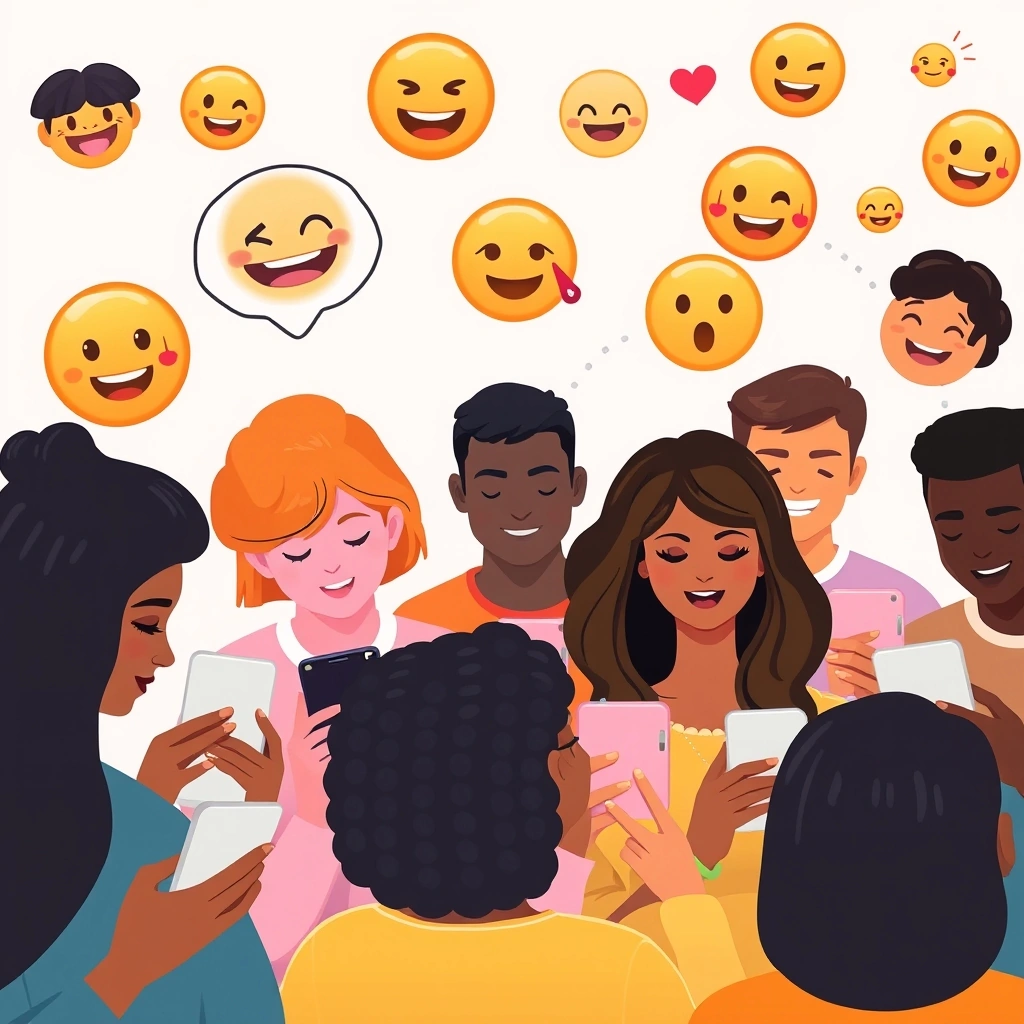
This isn't about randomness. The new meanings that stick usually fill a gap. They provide a shorthand for a complex modern feeling—think of the exhaustion symbolized by a certain face, or the affectionate irony of a skull. They give us tools for emotional precision that words sometimes lack, especially in quick, visual digital conversations.
Culture as the Catalyst
Global events and shifting social norms are powerful forces in this evolution. An emoji can become a symbol of solidarity during a movement. Another might see its use decline as cultural awareness grows and its previous connotations are re-evaluated. Emojis reflect the society that uses them, for better or worse.
This also means that an emoji's meaning can vary dramatically across different cultures and age groups. What is a simple object in one country might be a potent symbol in another. Younger generations, as the most prolific digital communicators, are often the drivers of these semantic shifts, repurposing older emojis for new linguistic needs. The journey of an emoji from a literal object to a tone indicator is a journey through our collective psyche.
You can see this play out constantly in emoji culture and trends. The lifecycle of a "viral" emoji—from niche to mainstream to potentially cliché—mirrors the lifecycle of slang. It shows how our digital language is in a state of constant, collaborative creation.
Why This Fluidity Matters
At first glance, this might seem like it could lead to confusion. If the crying-laughing face means one thing to me and another to my parent, doesn't that break communication? Paradoxically, this fluidity is what makes emojis so robust. Their strength lies in their interpretability and emotional resonance, not in rigid definitions.
It allows for personal and subcultural expression. It lets language breathe and grow. Instead of seeing changing meanings as a bug, we can see it as the core feature of a living visual language. It proves that our communication tools are shaped by us, not just for us. As discussed in our look at how viral moments rewrite our emoji language, these shifts are records of our shared digital history.
So, the next time you reach for an emoji, remember you're not just selecting a static icon. You're participating in a vast, ongoing conversation. You're using a tool that has been molded by countless conversations before yours and will continue to change with the ones that come after. The story of the emoji is, in many ways, the story of us—how we connect, how we feel, and how we continually reinvent the ways we say it all without saying a word.
📒 Related Blogs
More...The Pause Before the Emoji: How a Tiny Symbol Can Hold Space in a Difficult Conversation
Unleash the Fun: How Emojis Turn Casual Chats into Playful Mini-Games
Did You Just Offend Someone? The Hidden Traps of Emoji Misuse in Digital Chats
How a Simple Emoji Can Save Your Team From a Major Slack Misunderstanding
Emojis: Bridging Cultural Communication Gaps Beyond Words
Emoji's Emotional Shortcut: Understanding Instant Judgments in Digital Chat