That 'Whew!' Moment: How Emojis Whisper Relief in Our Private Chats

Jan 12,2026
Ever felt that sudden release of tension, that quiet “whew” moment, after reading a text? You know the feeling – that knot in your stomach loosens, your shoulders drop a little, and you might even let out a small, silent sigh. What often accompanies this wave of calm? More often than not, it’s a tiny, powerful emoji.
In the fast-paced world of digital communication, where misinterpretations can easily arise and intentions can get lost in translation, emojis have emerged as unsung heroes. They don’t just add color to our conversations; they add crucial emotional context, especially when it comes to expressing something as profound and personal as relief in our private chats. It’s a subtle dance, but one that makes all the difference.
The Unspoken "Whew!": Why Emojis Are Our Go-To for Relief
Think about it. How do you verbally express relief in a text message without sounding overly dramatic or lengthy? "Oh my goodness, I'm so relieved" feels a bit much sometimes, especially for everyday anxieties. This is where emojis truly shine. A simple 😌 (Relieved Face), a 🙏 (Folded Hands, often used in gratitude or thanks that implies relief), or even a straightforward 👍 (Thumbs Up) can instantly convey that feeling of a burden lifted.
These little icons cut through the noise, allowing us to share deep, personal emotions without needing a paragraph of explanation. They’re like a shorthand for our soul, understood almost universally within our close circles. It’s about more than just convenience; it’s about emotional efficiency and safety.
When Words Fail, Emojis Prevail
Sometimes, the very act of putting complex emotions into words can feel overwhelming. Imagine waiting for crucial news – a job interview result, a medical test, or even just confirmation that a loved one arrived safely. Your nerves are frayed, your mind is racing. When that much-anticipated message finally arrives, and it’s good news, the immediate urge isn't to craft a perfect sentence. It's to express that immediate, visceral sense of relief.
A quick 😅 (Grinning Face with Sweat) from a friend who just finished a tough presentation, or a simple 😮💨 (Face Exhaling) from your sibling after successfully navigating a complicated task, tells you everything you need to know. It’s a shared emotional experience, a moment of genuine connection that transcends the limitations of text-only communication. You can find more about how these digital expressions bridge emotional gaps in our Emoji & Emotion blog category.

Navigating Life's Little Anxieties with a Smile (or a Sigh)
Let's walk through some common scenarios where emojis step in to articulate relief:
- The Delayed Text: You text a friend, asking if they made it home okay after a late night out. Hours pass, and your worry grows. Then, finally, you get a message: "I'm good! Fell asleep right away, sorry!" followed by a 😴 (Sleeping Face) and a 😌 (Relieved Face). That second emoji is everything. It acknowledges your worry and confirms their safety, wrapping it all up in a neat little package of relief.
- The Misunderstanding Resolved: You had a slight disagreement or a confusing exchange with a loved one. There's an underlying tension. After some clarification, you send a message like, "Ah, okay, I get it now! Thanks for explaining," and they reply with a 🙏 (Folded Hands) or a 😊 (Smiling Face with Smiling Eyes). That simple emoji instantly dissipates the remaining awkwardness and brings a feeling of calm resolution.
- The Unexpected Good News: You apply for something you really want, but the odds feel slim. Weeks go by. Then, an email comes through: "Congratulations!" You immediately text your closest confidant. Their reply? Maybe a string of 🎉 (Party Poppers) and a 🤩 (Star-Struck) – but often, it's that grounded 😮💨 (Face Exhaling) or 😌 (Relieved Face) that truly resonates, conveying empathy for the stress you've been under.
Sharing Vulnerability, Safely
Emojis also provide a safe space for vulnerability. Sometimes, admitting you were worried or stressed can feel like oversharing. But a simple emoji can communicate that subtle emotional undercurrent without demanding a full explanation. It’s a way of saying, "That was a close call for my peace of mind," or "I was genuinely concerned, but now I'm okay," without actually having to articulate every feeling. This digital shorthand fosters a deeper, more empathetic connection, allowing us to be real without feeling exposed.
The Quiet Power of Digital Empathy
The ability of emojis to convey relief highlights a broader truth about digital communication: it’s not just about conveying information, but about sharing human experience. When someone sends you an emoji of relief, they're not just saying "I'm relieved"; they're acknowledging the emotional journey that led to that relief. They're validating your feelings, whether it was worry, anticipation, or stress.
This shared emotional shorthand is crucial for maintaining authentic connections in our increasingly digital lives. It allows for nuance, for unspoken understanding, and for a level of empathy that pure text alone can struggle to achieve. In moments of uncertainty, a well-placed emoji can be incredibly soothing. For more on this, check out our piece on The Silent Sigh of Relief: How Emojis Soothe Emotional Uncertainty in Everyday Chats.
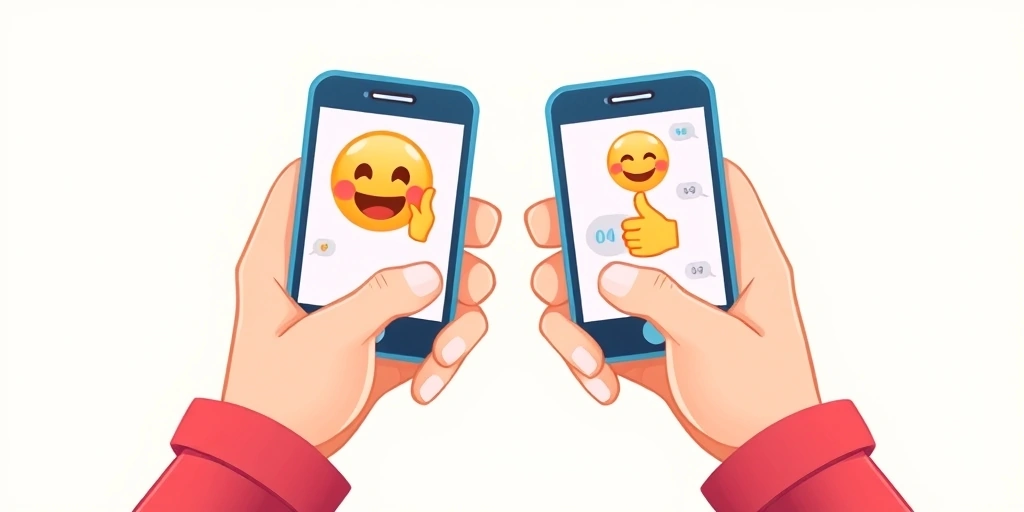
Fostering Intimacy Through Shared Emotional Cues
Think about your closest friends or family. You probably have a unique language of emojis you share, unspoken codes that instantly communicate complex feelings. When a friend sends you a 😮💨 after a difficult day, you don't need to ask why; you just know. It builds intimacy, strengthens bonds, and creates a sense of mutual understanding that words alone can sometimes complicate.
These little icons become part of our emotional vocabulary, helping us navigate the ups and downs of life together, even when we're physically apart. They remind us that behind every screen is a real person experiencing real emotions, and that digital tools can, in fact, enhance our capacity for empathy.
More Than Just a Face: A Collective Emotional Language
What makes emojis so effective in communicating relief isn't just their visual representation; it's the collective understanding we've built around them. We've all been in situations where we've felt that internal "phew," and we've all seen or used the emojis that perfectly capture it. This shared experience makes them incredibly powerful tools for emotional expression.
They act as tiny emotional anchors, grounding our conversations in reality and reminding us of the human element behind every message. So next time you're feeling that rush of relief, don't hesitate to send that perfect emoji. You're not just sending an image; you're sending a feeling, a moment of shared humanity, and a quiet "everything's going to be okay."
📒 Related Blogs
More...The Secret Code in Your Group Chat: How Emoji Pairs Change Everything
Emojis in Marketing: Boosting Brand Engagement with Digital Icons
The Secret Life of Emojis: How Viral Moments Reshape Our Digital Language
How Emojis Evolve: The Secret Language of Modern Internet Culture
The Emoji Awkwardness: When a Smiley Face Just Doesn't Feel Right
The Secret Language of Emojis: How Generations Speak Through Symbols