The Awkward Emoji: How Tiny Icons Save Us in Socially Uncertain Moments

Mar 18,2026
We’ve all been there. The text message arrives, and it’s… complicated. Maybe it’s a friend sharing news you’re not sure how to react to. Maybe it’s a colleague making a joke that lands a little flat. Or maybe it’s you, realizing your own message came out sharper than you intended. In that moment of emotional uncertainty, words often fail us. What do you type? How do you bridge the gap between what you feel and what you can safely express?
This is where the humble emoji has quietly revolutionized our conversations. It’s not just about being cute or casual. Over time, emojis have evolved into a nuanced toolkit for navigating social awkwardness. They act as emotional padding, a soft landing for sentiments that feel too heavy or too risky to spell out.
The Safety Net of a Symbol
Think about the classic grimacing face 😬. It’s the universal signal for “Oops,” “This is awkward,” or “I’m cringing a little on your behalf.” You can attach it to an apology to soften it, or use it after a slightly risky joke to telegraph that you’re not entirely serious. It does the emotional labor of acknowledging tension without requiring a three-paragraph explanation.
Similarly, the pleading face 🥺 or the slightly tearful 😅 can express a vulnerable request or admit a minor fault without making a huge deal out of it. They say, “I’m a little embarrassed to ask,” or “I messed up, but I hope we’re okay.” The message is in the subtext, carried by the emoji. It allows us to be emotionally honest while maintaining a layer of protection.
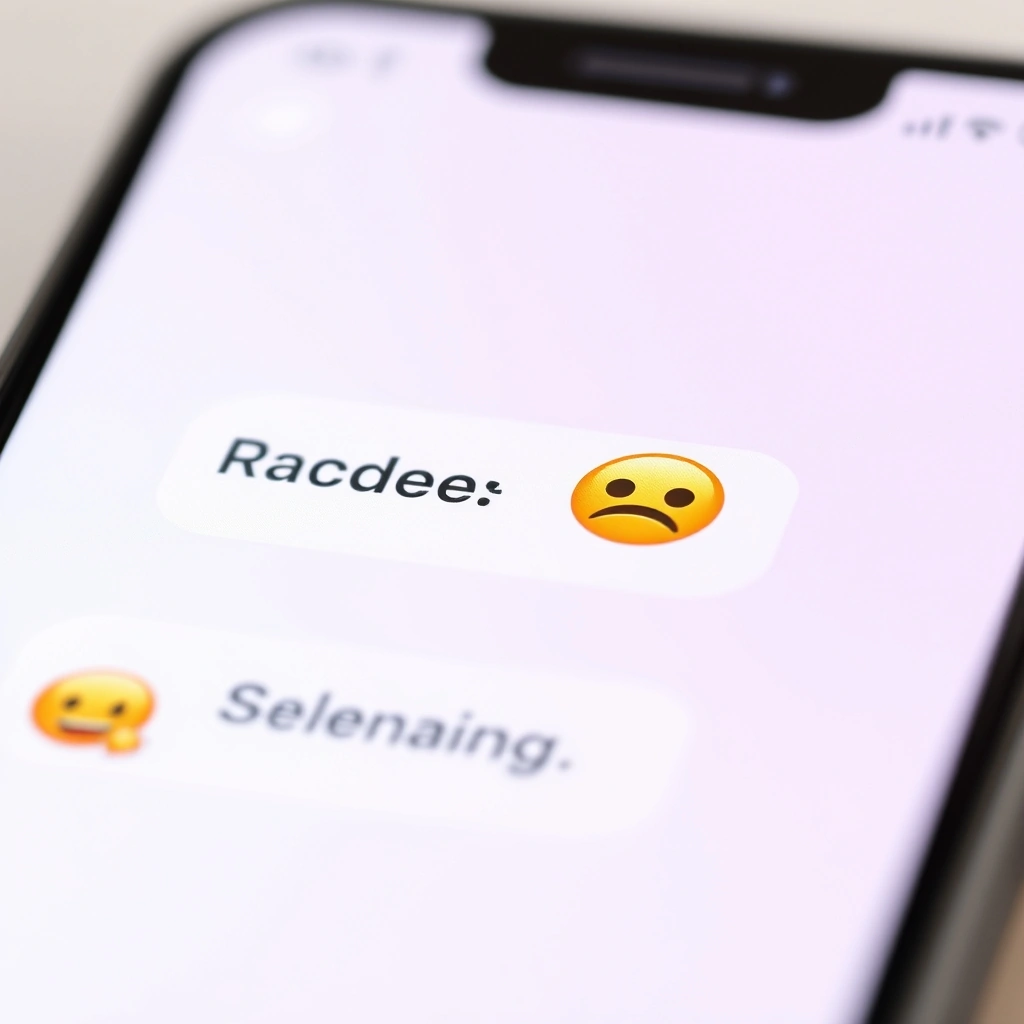
This function is crucial because digital text is so easily misread. Tone is absent. Sarcasm is invisible. A simple statement can feel cold or harsh. An emoji inserts that missing tone. It’s the digital equivalent of a hesitant smile, a shrug, or an apologetic glance across the room. It provides the context that plain text strips away.
From Uncertainty to Connection
What’s fascinating is how this use of emojis builds over time within relationships. You and a friend develop a shared shorthand. The “see-no-evil” monkey 🙈 might become your code for “I can’t believe I just said that.” The upside-down smile 🙃 might signal mutual understanding of a bizarre situation. This private language of icons helps you express complex, shared feelings instantly.
This process is part of a broader trend where emojis give us quiet confidence in our digital dialogues. They allow us to be more emotionally present, even when we’re physically distant. In moments of awkwardness, they don’t just express our feelings—they help manage the emotional temperature of the entire conversation.
It’s a form of emotional intelligence, translated into pixels. You’re not just reacting; you’re actively shaping how your message will be received. You’re saying, “I know this might be awkward, and I’m here in that awkwardness with you.” It’s a small act of empathy.
When Words Are Too Much, or Not Enough
Sometimes, the awkwardness comes from emotional overload. Someone shares sad news over text, and “I’m so sorry” feels insufficient. A heart emoji ❤️ or a hugging face 🤗 can convey a depth of sympathy and presence that words sometimes can’t capture. It’s a visual hug, a digital hand-squeeze.
Other times, the awkwardness is about potential conflict. Correcting someone, setting a boundary, or delivering mildly disappointing news is hard. A neutral or soft emoji like 🙂 or 🤷 can take the perceived edge off. It signals that your intent isn’t aggressive, even if the words themselves are direct. It keeps the channel open.
This ties into how we use visual cues to show more subtle emotions like disappointment or resignation. The slow fade of enthusiasm in a conversation can be charted through the emojis we choose, or stop choosing.
The Unspoken Rules of Awkward Emoji
Of course, this language has its own etiquette. Overusing emojis in a serious conversation can seem dismissive. Choosing the wrong one (a laughing tear 😂 instead of a sympathetic 😔) can create a bigger misunderstanding. We learn these rules through trial and error, through social feedback. We become fluent in this dialect of discomfort.
And that’s the beautiful thing. This fluency allows for a more authentic human connection in a medium that can feel inherently distancing. We’re not just sending information; we’re sharing our emotional state. We’re allowing ourselves to be seen as uncertain, vulnerable, or clumsy—and that’s profoundly relatable.
So the next time you hesitate over a message, your thumb hovering above the emoji keyboard, know that you’re not just adding decoration. You’re engaging in a modern form of emotional translation. You’re finding a way to say, “This is tricky for me, too,” and in doing so, you’re making the digital world feel a little more human, one awkward emoji at a time.
For more on how emojis shape our emotional lives, explore our thoughts on emoji and emotion.
📒 Related Blogs
More...The Hidden Power of Emojis in Your Daily Posts
How a Simple Emoji Can Save Your Team From a Major Slack Misunderstanding
The Final Touch: How Emojis Make Your Fast Messages Feel Complete
The Unspoken Shield: How Emojis Absorb Social Tension in Delicate Moments
The Fascinating Evolution of Emojis: From Emoticons to a Global Language
The Mind's Shortcut: How Emojis Change the Way We 'Hear' a Text