The Mind's Shortcut: How Emojis Change the Way We 'Hear' a Text

Mar 06,2026
You know that feeling. You send a plain text message, maybe just a simple 'okay' or 'sure.' Then, a second later, a wave of anxiety hits. Did that sound rude? Did it sound cold? So you quickly tap back, adding a smiling face or a thumbs up. Instantly, the message feels different. It feels complete. This tiny, almost reflexive action reveals a profound truth about how we communicate now: emojis aren't just decorations. They're essential guides for our brains, especially in the brief, context-poor world of short messages.
When we talk face-to-face, our brains are processing a symphony of information. We have tone of voice, facial expressions, gestures, and body language. All these cues work together to paint the full picture of what someone means. A sarcastic comment is understood because of the twinkle in an eye or a particular vocal inflection. But in a text? All of that rich, emotional data is stripped away. We're left with naked words on a screen, which our brains desperately try to clothe with meaning.
This is where the emoji steps in. It acts as a powerful mental shortcut. When your brain encounters the string of letters 'o-k-a-y,' it has to work to interpret it. Is it resigned? Angry? Neutral? Happy to agree? But when it sees 'okay 👍' or 'okay 😊', the cognitive load lightens dramatically. The emoji provides the missing emotional data, telling your brain, 'Process this as positive affirmation,' or 'Process this as friendly agreement.' It closes the interpretive gap at lightning speed.
[[emojilar_img1]]
This isn't just a feeling; it's backed by how our minds work. Our brains are pattern-recognition machines, wired for efficiency. In the absence of familiar social cues, they latch onto the next best thing. An emoji serves as a compact, visual symbol for a complex emotional state. A single 😂 can convey amusement, levity, and a desire to defuse tension, all of which would take multiple sentences to explain. In a fast-paced chat, that efficiency is everything. It prevents misunderstandings that can spiral from a simple misinterpreted tone.
Think about the difference between receiving 'Thanks.' and 'Thanks! 😄' The first might feel transactional, maybe even passive-aggressive if you're already in a sensitive headspace. The second feels warm, genuine, and appreciative. The emoji doesn't just add emotion; it actively steers your mental processing of the words that came before it. It sets the emotional frame. This is why a well-placed emoji can soften criticism ('This needs work 🧐') or amplify joy ('I'm so excited for you!!! 🎉').
The effect is even more pronounced in very short messages, where there are fewer textual clues to lean on. A standalone 'Sure' is a classic culprit for anxiety. But 'Sure 😁', 'Sure 🤔', and 'Sure 😒' are three entirely different conversations. The emoji becomes the primary carrier of intent, overriding the ambiguity of the lone word. For more on how these tiny symbols shape our deeper feelings online, you might find this exploration of emojis and emotional shaping really interesting.
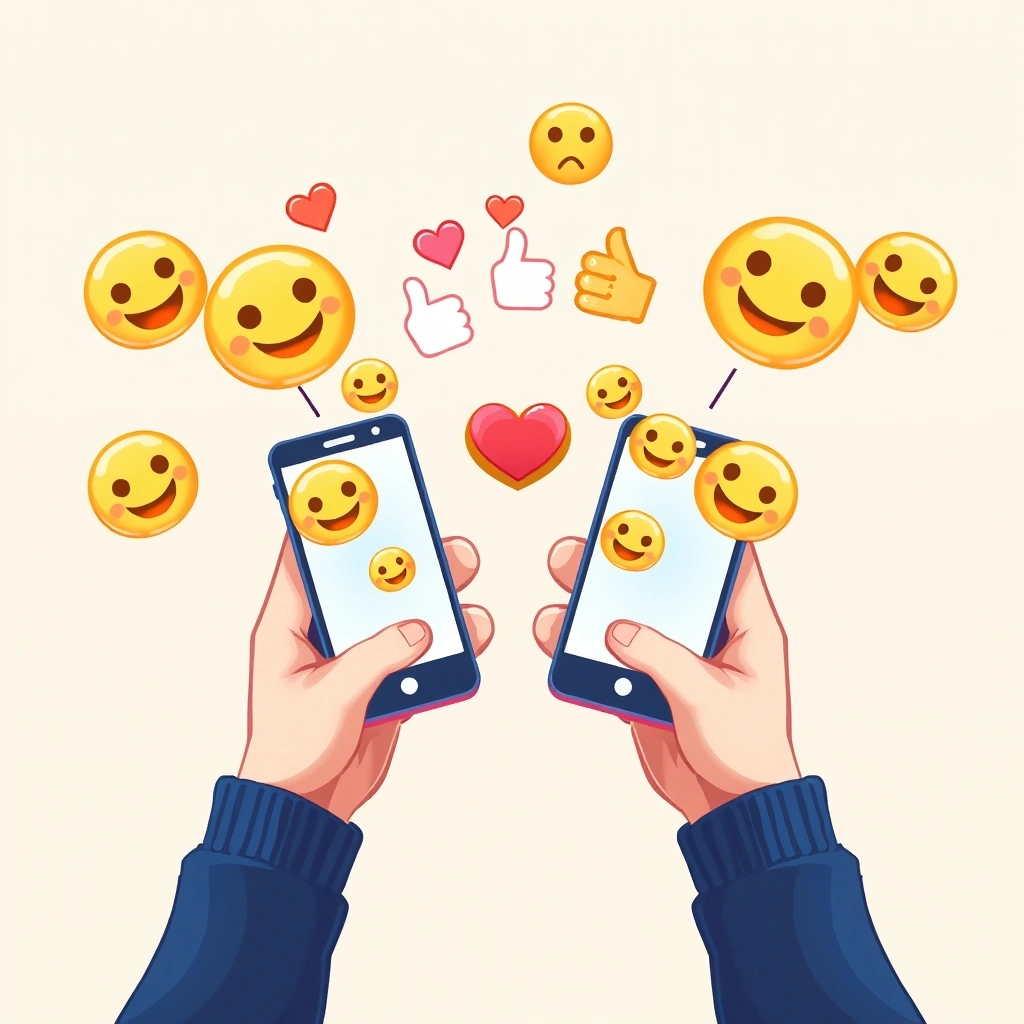
This mental shortcutting has a social dimension, too. Using emojis signals an awareness of the other person's perspective. It shows you understand that text is ambiguous and that you're putting in the extra effort to be clear and considerate. It's a digital form of empathy. When you add a heart to a message of support ❤️, you're not just saying 'I'm here for you'—you're giving your friend's brain an immediate, visceral feeling of warmth and care to attach to those words.
Of course, this system isn't foolproof. Emoji interpretation can vary by culture, generation, and even personal relationship. A winky face 😉 between close friends might mean playful teasing, but in a professional email, it could be seen as highly inappropriate. The brain's shortcut relies on shared understanding. But even with these variations, the core function remains: emojis provide a crucial, efficient layer of emotional metadata that our brains crave.
So, the next time you hesitate before hitting send, wondering if your message will land right, remember the power of that little pictograph. You're not just making your text prettier. You're giving the person on the other end a direct line to the tone and feeling behind your words. You're helping their brain take the right shortcut, fostering connection and clarity in a medium that's often starved of both. In the economy of attention and emotion that defines our digital lives, the emoji is one of our most valuable currencies. To dive deeper into the cognitive science behind this, check out our article on how emojis shape what we really think.
In the end, using an emoji is an act of kindness to the reader's mind. It's saying, 'Let me help you understand me.' And in a world full of short, easily-misread messages, that might be one of the most important things we can do.
📒 Related Blogs
More...The Secret Power of Emoji Sequences in Casual Comments
The Unspoken Rules: How Emojis Shape What We Really Mean in Text
The Emoji Revolution: Transforming Marketing & Branding Strategies
Beyond Words: How Emojis Shape the Tone of Public Online Conversations
Emoji Across Cultures: Global Meanings & Interpretations Explained
The Tiny Heroes of Clarity: How Emojis Stop Misunderstandings in Their Tracks