The Emoji Lifeline: How Tiny Symbols Guide Us Through Emotional Uncertainty

Mar 05,2026
You know the feeling. Your thumb hovers over the send button. The text you've written is fine—logical, clear, factually correct—but it feels like it's missing something vital. It feels cold, or too sharp, or strangely hollow. There's an emotional gap between what you've typed and what you genuinely feel or hope to convey. In that suspended moment of uncertainty, your eyes drift to the emoji keyboard.
This isn't about decorating a message. It's about emotional calibration. When we're navigating sensitive ground—checking in on a friend who's struggling, addressing a slight misunderstanding with a partner, or delivering news that might be difficult to hear—words can become treacherous. They can be misinterpreted, feel too formal, or land with an unintended thud. The subtext, the tone, the warmth, the hesitation… these nuances often get lost in plain text.
An emoji, in this critical moment, isn't a replacement for words. It's a companion to them. It's the soft sigh that precedes a difficult sentence. It's the gentle touch on the arm during a hard talk. It frames the words that follow, providing an emotional container for them. A simple heart can transform a "Thinking of you" from a casual remark into a sincere gesture of care. A weary face can soften a "I'm really tired" into a bid for understanding rather than just a statement of fact.
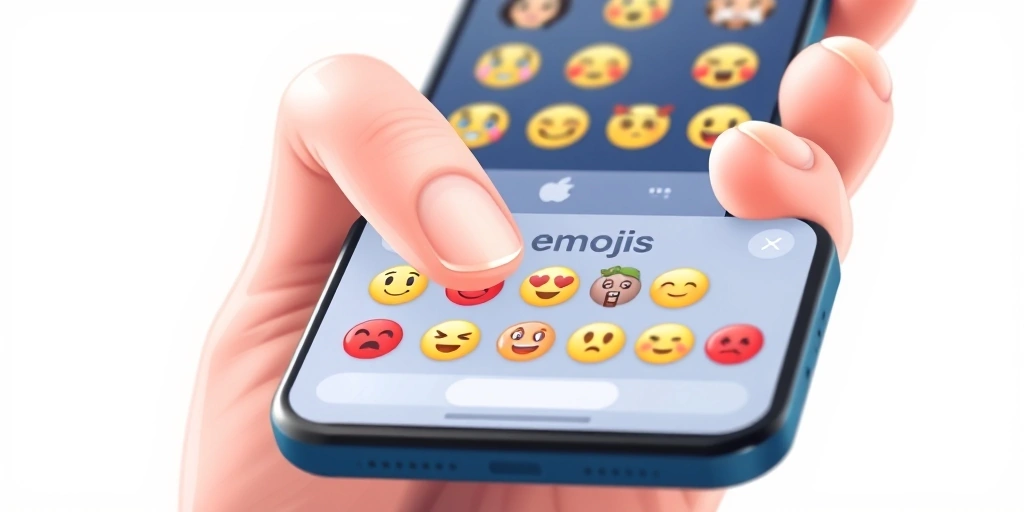
Over time, this practice does something profound: it builds a shared emotional shorthand. In the ongoing, sometimes fragmented dialogue of digital life, these small symbols become consistent touchpoints. They help mitigate the anxiety of the unknown. When you send a message that could be read in multiple ways, adding a specific emoji acts as a guiding light, reducing the cognitive and emotional load for the receiver. It answers the silent question, "What is the emotional temperature of this message?"
This is especially crucial in long-distance relationships, friendships, or remote work dynamics where we lack the full spectrum of face-to-face cues. A thumbs-up emoji following a agreed-upon plan carries a different weight—more affirmative, more enthusiastic—than just typing "ok." It closes the loop with a sense of positive closure. Conversely, an emoji with a neutral or slightly concerned expression can signal that you've received a heavy message and are sitting with it thoughtfully, not ignoring it. It holds space, as discussed in our piece on the pause before the emoji.
The help emojis provide isn't about being perfectly precise every time. It's about the attempt. It's about demonstrating emotional effort. It signals, "I am considering how this might feel for you." This repeated effort, this consistent punctuation of our digital speech with emotional color, slowly erodes uncertainty. It creates a safer, more understood channel for the messy, sensitive, and vulnerable parts of our lives to travel through.
We learn, through trial and error, which symbols resonate in our unique relationships. The laughing-crying emoji that always diffuses tension with your sibling. The single red heart that carries years of deep friendship. The folded hands that convey genuine gratitude or a plea for patience. This evolution is personal and powerful. For more on how these unspoken feelings build up, you can explore decoding the unspoken feelings emojis convey.
So the next time you pause, feeling that gap between your intent and your typed words, don't dismiss the impulse to add that little symbol. That moment of hesitation is your emotional intelligence at work. Choosing an emoji is an act of emotional care—a small, digital gesture that says, "I want you to understand not just my words, but the heart behind them." Over countless messages, these gestures weave a stronger, more resilient fabric of connection, turning uncertain exchanges into opportunities for deeper understanding.
This is just one of the many ways emojis shape our digital interactions. For more insights into how emojis function in different situations, visit our broader collection at Emoji & Situation.
📒 Related Blogs
More...The Quiet Comfort of Emojis: How a Simple Icon Says 'I'm Here' in Your Group Chat
The Unspoken Rules: How Emojis Shape Social Expectations in Your Online Chats
The Secret Life of Emojis in Slow Chats: How a Simple Icon Changes Everything
The Secret Language: How Emojis Make Our Digital Chats Flow Effortlessly
The Unspoken Rhythm of Emoji Sequences in Your Daily Chats
Beyond Words: How Emojis Shape Our Online Identity and Communication