The Emoji Oops Moment: When Your Professional Message Gets Misread

Mar 24,2026
It happens in a heartbeat. You're typing a quick message to a colleague, a client, or your manager. You want to sound friendly, approachable, and positive. So, you tap that little smiling face, the thumbs up, or the clapping hands. You hit send, feeling good about your clear and warm communication. Then... silence. Or a slightly off-kilter reply. Or, worse, a follow-up meeting request to 'clarify your tone.' What just happened?
Without intending to, we often use emojis as digital tone-of-voice. They're our punctuation on steroids, our way of saying, 'See? I'm nice! This is fine!' But in professional contexts, that intention doesn't always land. The cheerful emoji you used to soften a critique might be read as passive-aggressive. The 'face with tears of joy' 😂 you sent after a minor setback might be interpreted as you not taking the situation seriously. The simple period you ended a sentence with, followed by a thumbs up 👍, can suddenly feel like a period of finality and mild disapproval.
The core of the issue isn't the emoji itself. It's the vast, silent gulf between intent and interpretation. You are broadcasting from your own emotional studio, with your own context, mood, and relationship with the recipient. They are receiving on their device, filtered through their current stress level, their cultural background, their past experiences with you, and the often sterile environment of a work chat window.
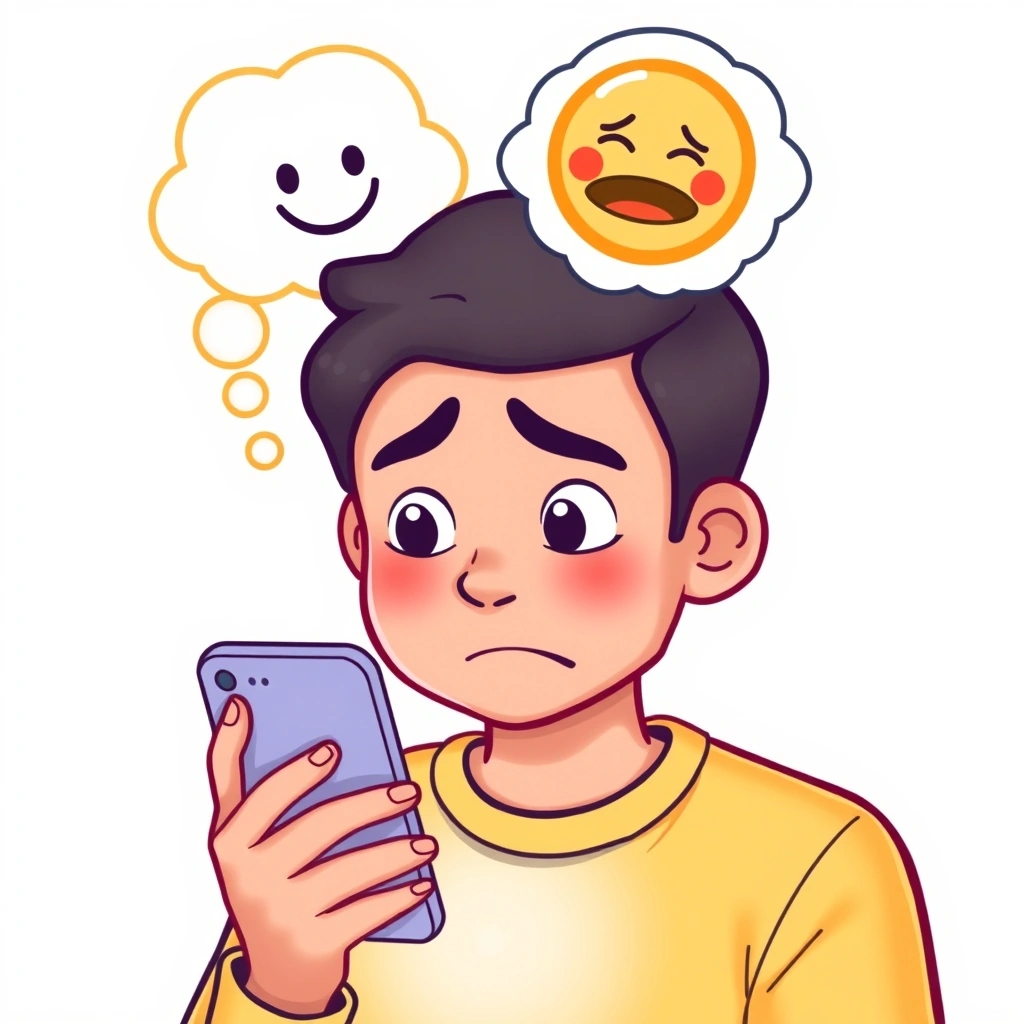
Think about the classic 'smiling face with smiling eyes' 😊. In your mind, it's the universal signifier of 'friendly!' 'agreeable!' 'no problems here!' But to someone else, especially in a text-based chain about a missed deadline or a budget issue, it can read as dismissive, insincere, or even smug. The emoji hasn't changed; the context has warped its meaning entirely. This is a common theme in professional emoji mishaps.
Why Context is the Invisible Editor
Professional messaging lacks the rich data of a face-to-face conversation. There's no body language, no vocal inflection, no immediate opportunity to say, 'Wait, that came out wrong.' An emoji steps in to try and fill that void, but it's a blunt instrument. A client from a different generation or corporate culture might see emojis as fundamentally unprofessional, full stop. A teammate having a bad day might project negativity onto even the most innocuous symbol.
I once used a simple winking face 😉 after a lighthearted suggestion in an email to a senior stakeholder. My intent: 'This is a playful idea, let's brainstorm!' The interpretation, as I found out later: 'She is not being serious about this project and is flirting.' I was mortified. The gap between what I meant and what was understood was a chasm I never intended to create.
These moments highlight what some call the hidden language of emojis. It's a language with fuzzy grammar, where a single character can be a noun, verb, and adjective all at once, depending on who's reading it.
The Unresolved Tension of Digital Tone
So, what's the answer? Do we banish emojis from professional communication altogether? For some, that's the safe choice. But it also drains our digital conversations of the very humanity we're trying to preserve. The alternative isn't easy, either. It requires a heightened sense of awareness.
It means pausing before you send. It means asking yourself: 'If I received this message from this person, with this emoji, at this moment, how would I feel?' It means knowing your audience—the close teammate might get the fire emoji 🔥 for a great idea, but your new VP probably shouldn't. It means sometimes opting for clearer words over a potentially ambiguous symbol. Instead of a grinning face 😀 after 'We need to talk,' you write, 'I'd appreciate your perspective on this when you have a moment.'
The reality is, this tension between wanting to connect and risking misunderstanding is unresolved. It's the new normal of our hybrid work lives. Emojis are not going away; they are evolving as a core part of our lexicon. The goal isn't perfection—it's reducing the frequency of those gut-dropping 'emoji oops' moments. It's about recognizing that the tiny icon on your screen is not just a cute picture. It's a packet of emotional data, and in the complex network of professional relationships, data packets can get corrupted in transmission.
The next time you reach for that emoji keyboard in a work email or Slack channel, just take a breath. Consider the invisible editor of context sitting on your recipient's shoulder. Your intent is clear to you. Making sure the interpretation aligns is the subtle, ongoing work of communicating in a world where our smiles are often just pixels. For more on how tone gets lost, you can read about when emojis backfire in surprising ways.
📒 Related Blogs
More...How a Simple Emoji Can Save Your Remote Work Day
The Secret Life of Emojis: How Their Meanings Morph with Internet Trends
The Quiet Pulse of Familiar Chats: How Emojis Keep Us Connected
How Emojis Become the Heartbeat of Viral Moments
The Secret Power of Emojis: How Tiny Icons Shape How We See Each Other Online
The Secret Power of Emojis: How a Simple 😊 or 😬 Changes How People See You