The Hidden Power of Emojis: How a Simple Symbol Can Change a Conversation's Tone

Mar 02,2026
Think about the last time you sent a plain text message. Maybe it was a simple "okay" or "sounds good." Now, think about how you felt after hitting send. A tiny flicker of doubt? A worry that the other person might read it as cold or annoyed? If you've ever experienced that, you're not alone. In the silent world of text, our words float in a vacuum, stripped of the vocal tone, facial expressions, and body language that give them meaning in person. This is where the humble emoji steps in, not as a frivolous decoration, but as a crucial communication tool.
Emojis function as the tone-of-voice indicators for the digital age. They don't just add emotion; they help define the emotional and social context of the words around them. A period can feel final. A "k" can feel dismissive. But a "k 😊" or a "Got it! 👍" completely reframes the message. It's the difference between a door slamming shut and one being held open for you.
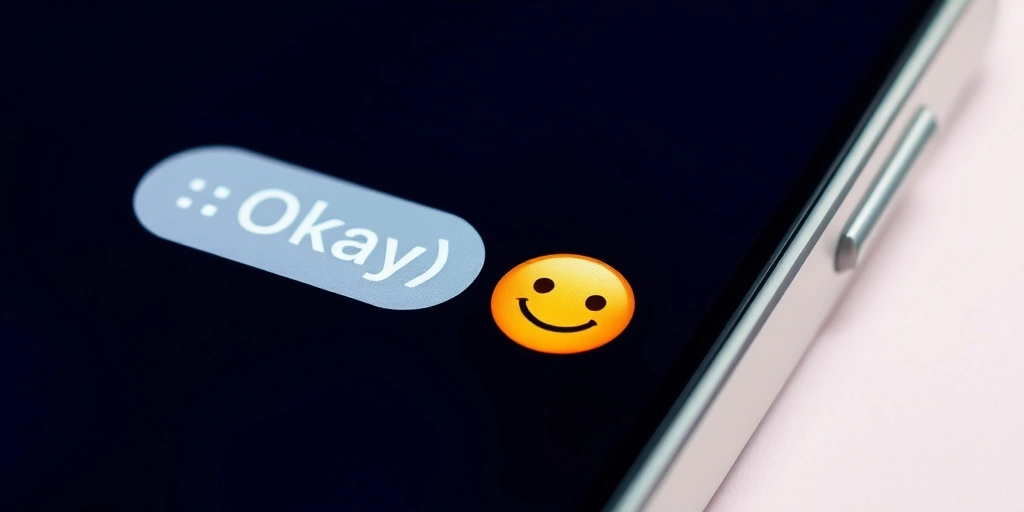
This isn't about being overly emotional. It's about being clear. In professional settings, for instance, a quick "Thanks!" after a request can feel curt. Adding a simple 🙏 or a 🙂 can convey genuine appreciation and maintain a collaborative tone. It softens the edges of our shorthand communication. We intuitively understand that a smiling face after feedback ("Great job on the draft! 😄") feels more encouraging than the same words without it. The emoji isn't the emotion itself; it's a signal guiding the receiver on how to interpret the sender's intent.
From Ambiguity to Clarity
Consider sarcasm, the trickiest tone to convey in writing. Without the wink of an eye or a certain vocal lilt, sarcasm can easily be misread as sincerity or even rudeness. A sentence like "Wow, you're really helpful" is painfully ambiguous. Is it genuine praise or a sharp jab? Add a 😏 or a 🙃, and the intent becomes instantly clear. The emoji acts as a meta-commentary on the text, a nudge that says, "Read this with a layer of irony."
This clarifying power extends to softening requests or delivering mild criticism. "Can you send that file again?" feels more like a neutral question with a 🥺 or a 😅. It acknowledges a potential inconvenience without sounding demanding. It’s a small digital gesture that maintains social harmony. For more on how emojis shape intent in fast-paced environments, you might find this exploration of emojis in quick chats really interesting.
The Social Glue in Group Dynamics
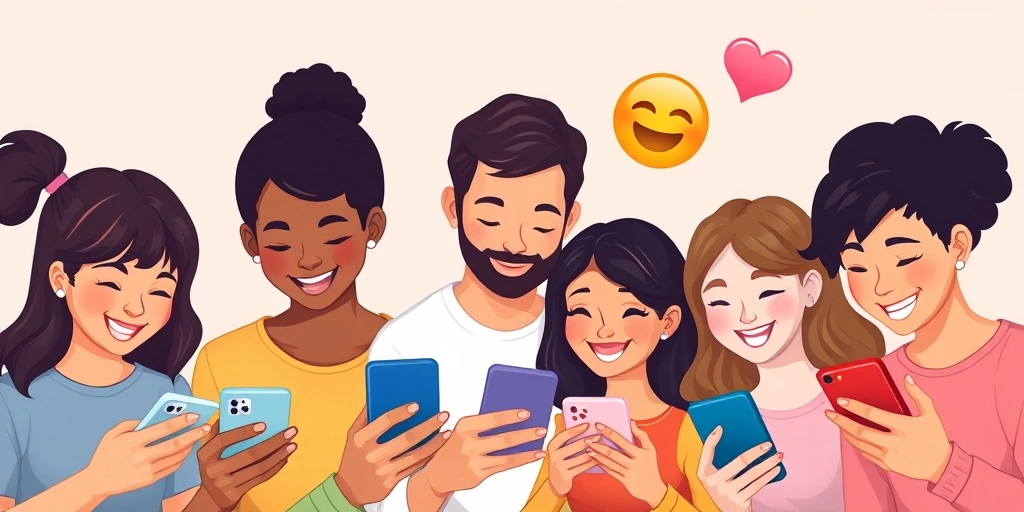
The role of emojis becomes even more complex and vital in group chats. Here, they don't just clarify tone for one person; they help manage the social dynamics of the entire group. A well-placed 😂 can signal that a joke was made and should be taken lightly, encouraging others to join in. A ❤️ or a 👏 can show support and build camaraderie without requiring everyone to type out a lengthy response.
They also help navigate the unspoken rules of digital conversation. In a busy group thread, a simple 👍 can serve as an "acknowledged" or "I agree" without adding noise. It's a low-effort, high-value social token that keeps the conversation flowing. The nuances of this are fascinating, and the unspoken rules of group chats delve deeper into this phenomenon.
Of course, this tool comes with a need for mindful use. The same emoji can carry different weights in different relationships or cultures. What feels friendly and casual with a close friend might feel overly familiar in a new work connection. The key is to view emojis as part of your communicative toolkit—like choosing the right words for your audience.
At their core, emojis are a response to a fundamental problem of text-based communication: the lack of shared context. They are a bridge between the sender's intent and the receiver's interpretation. They fill the silence with social cues, turning a stark sequence of words into a more complete, nuanced, and human interaction. They remind us that behind every screen is a person trying to connect, and sometimes, a single symbol is the most efficient way to say, "This is how I mean it."
To explore more about how these small symbols shape our big conversations, check out other thoughts in our emoji & communication category.
📒 Related Blogs
More...The Gentle Art of the Short Reply: How Emojis Add Warmth to Your Texts
The Hidden Power of Emoji Pairs in Your Private Chats
Emojis & Mental Health: Expressing Emotions Digitally for Better Connection
The Tiny Lifesaver: How Emojis Rescue Us From Awkward Chat Silences
Unleash the Fun: How Emojis Turn Casual Chats into Playful Mini-Games
How Emojis Keep Your Slack Messages Professional (and Friendly)