The Unspoken Rules of Group Chats: How Emojis Reveal What We're Really Supposed to Feel

Mar 02,2026
Think about the last big group chat you were in. Maybe it was a family thread planning a reunion, a work project channel, or just your closest friends sharing memes. Now, think about the emojis. Not just the ones you sent, but the ones that appeared after someone else's message. That string of crying-laughing faces, the thoughtful thumbs-up, the solitary heart. They're not just decorations. They're social signals, and they come with a quiet set of expectations for everyone in the conversation.
We often talk about emojis as tools for personal expression, but in a group setting, their function shifts. They become a form of social glue and, sometimes, social pressure. They hint at how we're supposed to react, creating an unspoken script for the digital room.
The Ripple Effect of the First Reaction
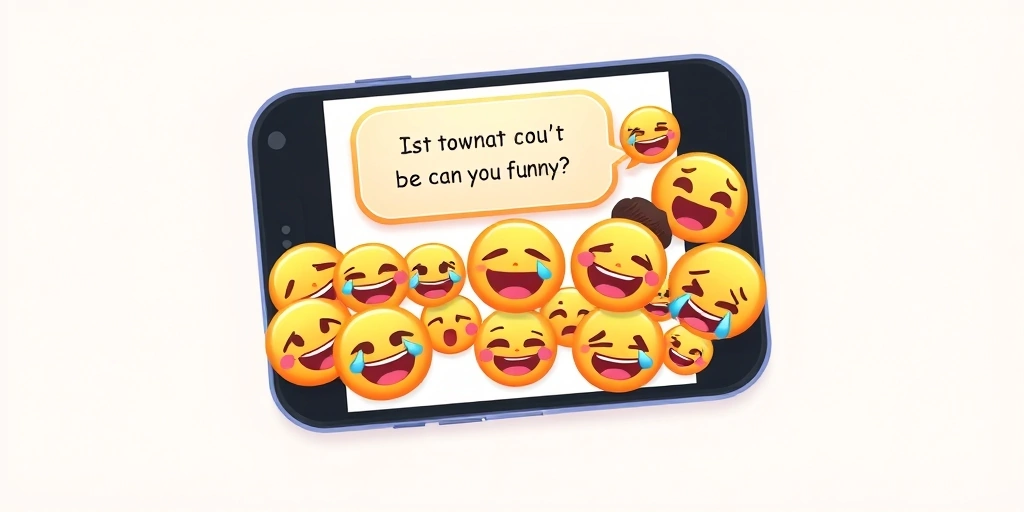
It usually starts with one person. Someone shares a mildly funny observation, and a single friend replies with the crying-laughing emoji. Then another does. Then another. Suddenly, what might have been a chuckle-worthy comment is framed as the funniest thing ever posted. That initial emoji reaction sets a precedent. It tells the rest of the group: This is the correct emotional response here.
This creates a subtle pressure to conform. Do you join the laughing train, even if you didn't find it that funny? Or do you break the pattern with a simple 'haha' or, worse, no reaction at all? Your choice feels weighted, like a tiny social vote. This phenomenon is part of what we explore in our look at the emoji echo chamber, where group dynamics can amplify and solidify certain emotional responses over time.
When the Thumbs-Up Says More Than 'Okay'
Then there's the classic thumbs-up. In a one-on-one chat, it often just means 'got it' or 'sounds good.' But in a group? Its meaning multiplies. When a plan is proposed and the first few responses are enthusiastic ('Yes!', 'Can't wait!', party popper emojis), a lone thumbs-up can feel detached, even dismissive. It doesn't match the energy. It might signal reluctant agreement, passive acceptance, or a simple lack of anything else to say. The sender might mean 'okay,' but the group reads it as 'meh.'
The emoji didn't change, but the social context around it did. The expectation, set by the earlier reactions, was for enthusiasm. The thumbs-up, by comparison, falls short.
The Weight of the Missing Emoji
Sometimes, the most powerful signal is the one that isn't sent. Imagine someone shares personal news—good or bad—in a group. A few people respond immediately with heart emojis, congratulatory messages, or words of support. Then, silence from a few other members. That silence, highlighted by the flurry of reactions from others, becomes conspicuous. The absence of an emoji or reply itself communicates. It might signal busyness, distraction, or indifference. The person who shared the news might wonder: 'Did they see it? Do they not care?'
The social expectation, created by the initial responders, is for acknowledgment. To not acknowledge is to make a statement, whether intended or not.
Navigating the Unwritten Rules
So, what do we do with this knowledge? The goal isn't to become paranoid about every emoji you send. It's to become more aware of the rich, nuanced layer of communication happening beneath the text. It's recognizing that our digital interactions have their own etiquette, shaped by these tiny, colorful icons.
It's about understanding that a well-placed emoji can validate someone's feelings, reinforce a group bond, or gently guide the conversation's tone. Conversely, being mindful of these patterns can help us avoid unintentionally applying pressure or misreading others' intentions. For more on how a single icon can shift an entire message's meaning, check out our thoughts on the hidden power of emojis.
At the end of the day, emojis in group chats are a fascinating mirror. They reflect our desire for connection, our sensitivity to social norms, and our sometimes-awkward attempts to navigate the spaces between words. They hint at the expectations we hold for each other, reminding us that even in our most casual digital hangouts, we're all still reading the room—one pixelated face at a time.
To dive deeper into how emojis shape our talks, explore more in our emoji & communication blog category.
📒 Related Blogs
More...The Hidden Power of Emojis: How a Tiny Icon Can Change Your Message's Meaning
The Neutral Zone: How Emojis Keep Your Work Chats Calm, Clear, and Professional
Beyond Words: How Emojis Shape Our Online Identity and Communication
The Future of Emojis: Predicting the Next Big Innovations in Digital Communication
The Unspoken Language: How Emojis Cut Through Text in Familiar Chats