The Emoji Echo Chamber: How Group Chats Rewire Our Intent Over Time

Feb 27,2026
You know that feeling. You send a quick message to the group chat—maybe a simple "sure" or "okay"—and you pause. Do you add a smiley face? A thumbs up? Or just send it plain? That tiny decision feels insignificant, but over time, those choices aren't just about one message. They're quietly building a profile of you in the minds of everyone else in the chat.
It starts with a single impression. A message without an emoji in a fast-moving conversation can land as curt or disinterested. Add a grinning face 😄, and suddenly you're the enthusiastic one. Use a thinking face 🤔 a few times, and you become the group's cautious analyst. These aren't labels we consciously assign, but they're inferences our brains make effortlessly, stitch by stitch, message by message.
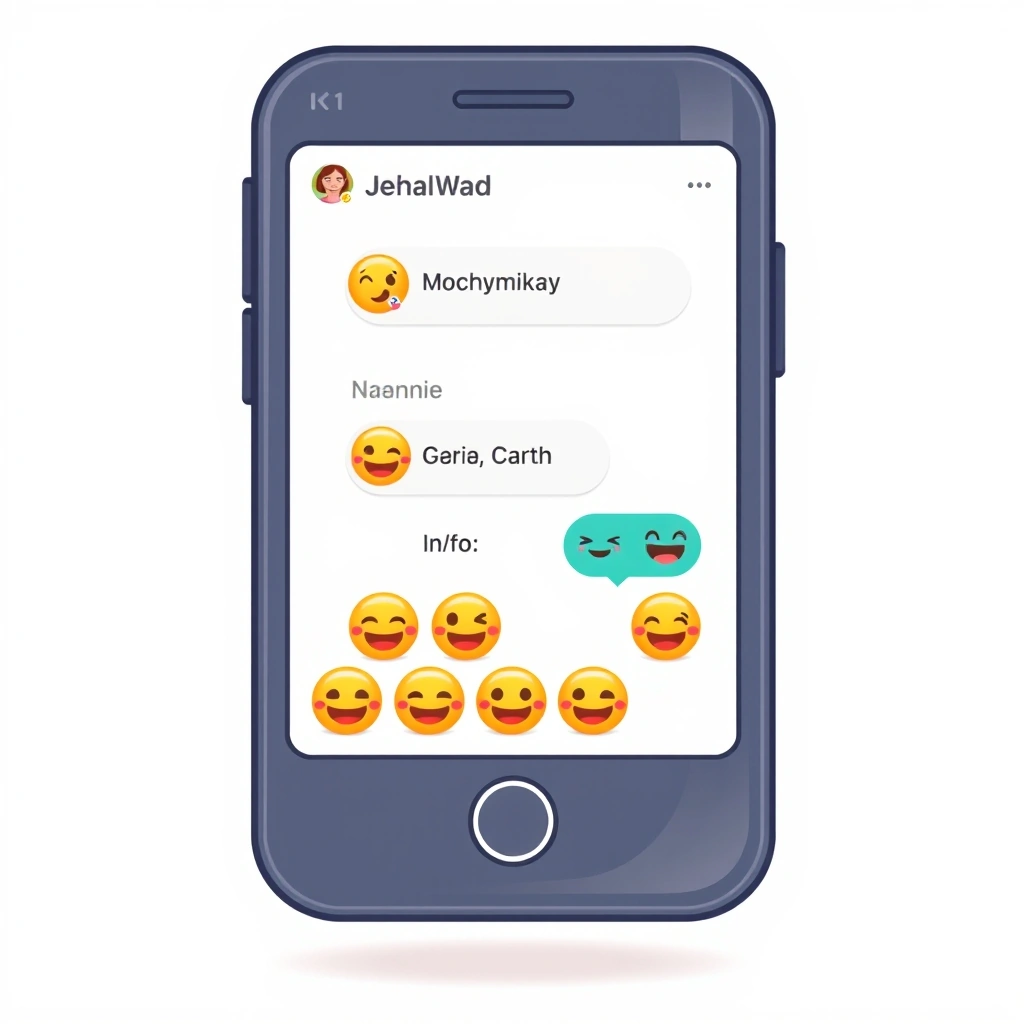
This process is what I call the 'emoji echo chamber.' The emojis you use most frequently create a feedback loop. If you're known for your hearty use of the crying-laughing emoji 😂, people will start to read even your more neutral statements through that lens of humor. They might assume sarcasm where there is none, or miss a moment of genuine concern because it's wrapped in your usual playful packaging. Your intent gets filtered through the persona your emoji history has built.
The Slow Shift in Group Perception
This effect is magnified in group settings. Unlike a one-on-one chat where context is shared between two people, a group chat is a public stage. Your messages are being interpreted not just by you and the recipient, but by an audience. That audience collectively reinforces a certain reading of your tone.
Let's say you're having a busy week and your replies are shorter, with fewer emojis. In a one-on-one chat, your friend might check in, asking if everything's okay. In a group chat, the same behavior might be silently noted by several people as "Sarah's being quiet today" or "Mark seems off." The group, without even discussing it, can converge on a shared perception of your intent—one that might be completely off-base from your reality.
This ties into a broader concept of how emojis manage conversation flow. You can read more about the pacing of digital talks in our piece on the unseen tempo of emojis.
When Your Emoji Persona Clashes with Your Intent
The real friction happens when you need to break character. Imagine you're the person who always uses lighthearted emojis. One day, you have a serious point to make. You type out a thoughtful, important message and hit send. But without your usual 😉 or 🎉, the message sits there, naked. The group, conditioned to your cheerful tone, might not register the weight of your words immediately. They might wait for the punchline, or worse, misinterpret your seriousness as passive-aggression.
Conversely, if you're typically more reserved, suddenly dropping a string of heart emojis ❤️🔥💖 might cause more confusion than warmth. People might wonder if you're being ironic or if your account was hacked. The existing 'emoji reputation' creates a barrier to expressing a different facet of your intent.
This isn't just about social chats. In professional spaces, this framing is critical. A single emoji can set the tone for an entire project update. For a deeper dive into navigating this tricky terrain, explore the professional emoji paradox.
Rewriting the Script (One Emoji at a Time)
So, are we trapped by our own emoji histories? Not exactly. Awareness is the first step. Recognizing that these tiny symbols carry cumulative weight allows us to use them more intentionally.
It can be helpful to occasionally 'reset' your tone in a group. If you're usually the joker, deliberately using a sincere 👍 or a supportive 🤝 on a teammate's good news can reinforce that you're also engaged and supportive. If you're the serious one, sharing a relatable 😮💨 (exhale) or a celebratory 🥳 on a Friday can soften your digital presence and make you more approachable.
Pay attention to the evolving language of the group itself. Emoji use is a collective dance. A new emoji might catch on (remember the rise of the 🫡 for respect?), subtly shifting the group's entire communicative style. Jumping in on these micro-trends can be a way to stay in sync with the group's emotional rhythm.
Ultimately, emojis in group chats are less about decorating individual sentences and more about participating in a long-term, collaborative story. Every smiley, every thumbs up, every facepalm is a brushstroke in a portrait the group is painting of you—and of itself. The intent behind your message today is always in conversation with the persona built by all your messages from yesterday.
The goal isn't to overthink every symbol. It's to understand that in the dense, fast-paced world of group messaging, these symbols are the primary tools we have to convey nuance, warmth, and humanity. They're the glue and the punctuation of our digital relationships. Using them with a little more consciousness helps ensure the 'you' that echoes back from the group chat is the 'you' you actually intend to be.
For more insights on the nuances of emoji-driven dialogue, check out our other articles in the emoji & communication category.
📒 Related Blogs
More...When Words Aren't Enough: Decoding the Unspoken Feelings Emojis Convey in Delicate Exchanges
The Unspoken Magic of Emoji Pairs: How Two Little Icons Say So Much More
The Secret to Feeling Heard: How Emojis Complete Your Quick Replies
The Hidden Cost of a Smiley Face: When Emojis Backfire in Your Texts
The Future of Emojis: Decoding Digital Expression's Next Frontier
The Hidden Language of Emojis: When Your Smiley Face Says More Than You Think