The Professional Emoji Paradox: How a Simple Symbol Can Frame Your Entire Message

Feb 26,2026
Think about the last message you sent to a colleague. Was it a simple request? A status update? Now, think about whether you added an emoji. That tiny digital glyph probably did more heavy lifting than you realized.
In professional messaging, our words are often stripped of the vocal tone and body language that give them meaning in person. This is where emojis step in, not as frivolous decorations, but as essential framing devices. They set the stage for how your message should be interpreted.
The Frame is Everything
Consider the difference between these two messages:
"Can you get me those reports by EOD?"
Versus:
"Can you get me those reports by EOD? 😊"
The first is a neutral, direct question. It could be read as a simple reminder or, depending on context and past interactions, as a pointed demand. The second, with the smiling face, actively frames the request as friendly and collaborative. It preemptively softens the ask, reducing the potential for the recipient to perceive it as aggressive or impatient.
The emoji acts as a frame around the literal words, guiding the viewer's eye toward a specific interpretation. Without it, the frame is blank, leaving more room for the reader's own anxieties or assumptions to color the message.
From Neutral to Nuanced
This framing power transforms otherwise flat statements. A "Great job on the presentation" feels formal and possibly distant. "Great job on the presentation! 🎉" frames it as celebratory and genuinely enthusiastic. A "Let's discuss this tomorrow" can feel ominous. "Let's discuss this tomorrow 👍" frames it as an agreement on next steps, not a looming confrontation.
This isn't about being inauthentically cheerful. It's about using visual cues to accurately convey the tone you intend, which is often collaborative and positive in a professional setting. As we've discussed in articles like Beyond Words: How Emojis Steer the Tone of Your Online Chats, these small symbols are the steering wheels for our digital conversations.
The Risk of Misframing
Of course, frames can be chosen poorly. The wrong frame creates dissonance. A sarcastic or eye-rolling emoji following serious feedback can completely undermine your message and damage trust. Using a laughing emoji in a thread about a missed deadline can frame you as dismissive.
The key is intentionality. Ask yourself: "What is the primary emotion or tone I want this message to carry?" Is it urgency? Gratitude? Solidarity? Then, choose a frame—an emoji—that supports that. A simple checkmark (✅) can frame a message as efficient and task-oriented. A raised hands emoji (🙌) can frame it as appreciative.
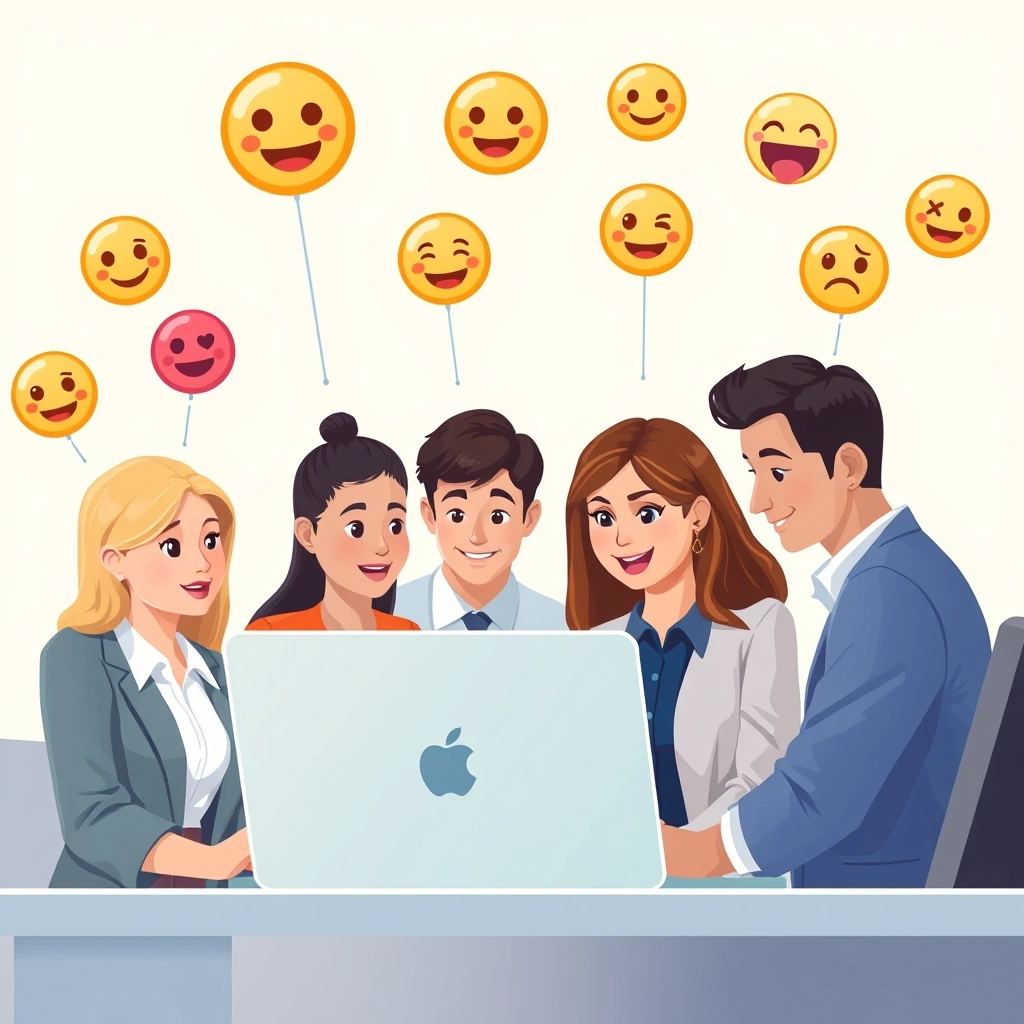
This becomes even more critical in group dynamics, where interpretations can multiply. A message meant as a lighthearted tease can be read as a harsh critique without the proper framing. The social context of a group chat amplifies the need for clear tonal signals, a topic explored in The Group Chat Effect.
Building a Shared Framing Language
The most effective professional teams often develop an unspoken, shared understanding of certain emojis. The fire emoji (🔥) might frame something as excellent. The thinking face (🤔) might frame a question as a genuine open-ended puzzle for the team to solve, not a challenge to one person's work.
This shared vocabulary doesn't happen by accident. It's built by consistently using emojis with intention. When leaders and team members reliably use a thumbs-up to frame agreement and a red exclamation mark (❗) to frame genuine urgency, they create a more predictable and psychologically safe communication environment.
So next time you're about to hit send on a work message, pause for a second. Look at the words in the box. What frame are you putting around them? Is it the right one for the message you truly mean to send? That one small choice can be the difference between a message that lands as intended and one that sparks an unnecessary misunderstanding. In the architecture of professional relationships, emojis are more than decor; they're the essential framing that holds the whole conversation together.
For more insights on how these symbols shape our digital dialogue, explore our collection on Emoji & Communication.
📒 Related Blogs
More...The Art of the Brief Reply: How a Simple Emoji Transforms Professional Messaging
How a Simple Emoji Can Make Your Deadline Reminders Sound More Polite
How Emojis Tell the Story of Our Changing Digital World
How Emojis Become Our Shared Internet Language
The Friendly Nudge: How Emojis Keep Remote Work Human
The Viral Heartbeat: How Emojis Fuel the Spread of Reactions Online