The Secret Language of Likes: How Emojis Shape Your Social Media Conversations

Mar 24,2026
More Than Just Decoration
Think about the last post you scrolled past. Was it just text? Chances are, it wasn't. In the blink-and-scroll world of social media feeds, emojis have become our silent co-pilots. They don't just sit there looking cute; they actively work to shape how a message lands. A post announcing a promotion with a simple 'Got the job!' feels very different from one that says 'Got the job! 🎉🙌🥳'. The words are identical, but the emotional payload? Worlds apart.
This isn't just about being playful. It's about precision. In a medium stripped of body language, tone of voice, and facial expressions, we've collectively agreed that a tiny digital icon can carry the weight of our intent. It fills the emotional void left by plain text.
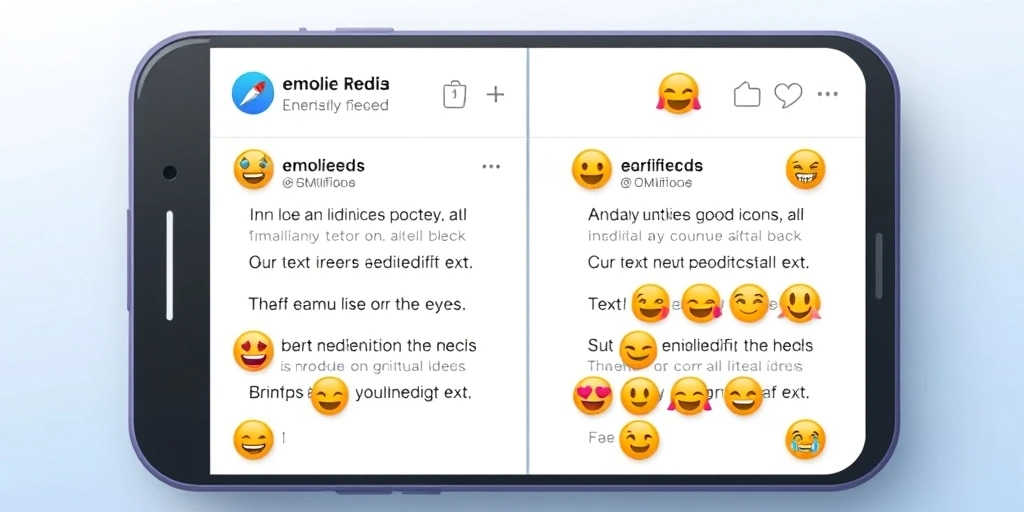
The Tone-Setter in Your Pocket
Consider how you read a message. Your brain doesn't just process the words; it immediately scans for emotional cues. An emoji acts as that cue, setting the tone before a single word is fully digested. A complaint tweet ending in an angry face 😠 is read as genuine frustration. The same tweet ending with a winking face 😉 or a laughing-crying emoji 😂 is instantly decoded as sarcastic or self-deprecating humor. The emoji didn't change the words—it changed the entire context in which they were received.
This power to frame a conversation is immense. It can defuse potential conflict, amplify joy, or signal solidarity. When we add a heart ❤️ to a supportive comment, we're not just liking a statement; we're offering a piece of digital empathy. It's a nuance that plain text struggles to achieve on its own. For more on this subtle power, explore how a simple symbol can change any online conversation.
From Broadcast to Conversation
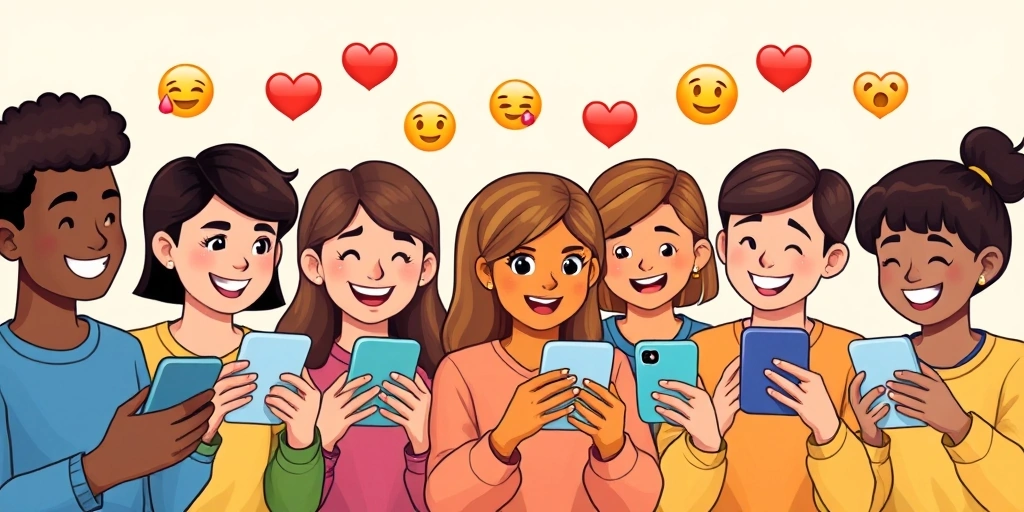
Social media at its best is a dialogue, not a monologue. Emojis are the primary tool that turns a static post into an invitation for interaction. A question posed with a curious face 🤔 feels more open and engaging than a stark line of text. It says, 'I'm genuinely wondering,' not just 'Answer this.'
This is especially true in public, digital spaces where we're all subconsciously negotiating social bonds. Using emojis that match the community's vibe—be it celebratory 🥂, supportive 🤗, or humorous 🤣—is a way of saying, 'I speak your language. I'm part of this.' It's a low-stakes way to build rapport and show you understand the unspoken rules of the group.
The Algorithm's Favorite Snack
Let's be real for a second: the platforms themselves love emojis. Engagement is their currency, and posts with emojis often see higher rates of likes, comments, and shares. Why? Because they are visually arresting in a text-heavy feed and emotionally resonant. They make people pause, feel, and react. That reaction—whether a laugh, a nod of agreement, or a surge of empathy—is what prompts someone to hit 'like' or leave a comment, signaling to the algorithm that this is content worth showing to more people.
So, when you strategically use an emoji, you're not just talking to your friends; you're subtly optimizing your message for the digital ecosystem it lives in. It's a fascinating intersection of human emotion and machine logic. Dive deeper into the unseen power of emojis on social media reactions to understand this dynamic better.
Navigating the Nuance
Of course, with great power comes great responsibility (and the occasional misinterpretation). The 'folded hands' emoji 🙏, for example, can mean 'please' or 'thank you' in some contexts, and 'prayer' in others. A skull 💀 might signify something is hilariously funny to one person and morbid to another. The meaning isn't fixed; it's negotiated within communities, generations, and cultures.
This is why paying attention to context is key. The emojis that work perfectly in a group chat with close friends might not land the same way in a professional LinkedIn post. The art lies in choosing symbols that clarify your intent for your specific audience, reducing the cognitive load on the reader to figure out 'what you really meant.'
At the end of the day, emojis are the punctuation marks of the 21st century, but they're so much more expressive than a period or comma. They are the tools we use to paint emotion onto the digital canvas, to ensure our laughter, our support, our sarcasm, and our love aren't lost in transmission. They shape not just how our posts are received, but how connected we feel in the vast, scrolling public square. For more insights on this ever-evolving digital language, check out our other articles on emoji and social media.
📒 Related Blogs
More...The Instant Feeling: How Emojis Spark Our Gut Reactions
Cracking the Code: How Emojis Shape What We Really Mean Online 🤔
When Emojis Backfire: The Unseen Complication of Digital Tone
When Words Fail: How Emojis Bridge Awkward Silences
The Unspoken Language: How Emojis Mirror Our Shifting Online World
The Silent Nod: How Emojis Keep Us Connected Without a Single Word