The Tiny Peacekeepers: How Emojis Defuse Tension in Group Chats

Mar 03,2026
You know the feeling. The group chat has been buzzing all day. Plans are being made, jokes are being shared. Then, someone sends a message that lands a little… flat. Maybe it’s a suggestion that gets ignored. Maybe it’s a joke that doesn’t quite get a laugh. A tiny pocket of silence opens up in the digital space. It’s not a fight, not even an argument. It’s just a small, prickly moment of social tension.
And then, it happens. A single emoji appears. A laughing face with a tear. A pleading face. A simple heart. It’s not a reply, not really. It’s more of a reaction. A soft landing pad for a message that was hovering in uncomfortable air.
That emoji absorbs the tension. It soaks it up like a tiny, colorful sponge.
We often talk about emojis as tools for expression, for adding emotion to plain text. And they are. But in group dynamics, their role becomes more nuanced. They become mediators. When words alone are too blunt or too risky, an emoji steps in to do the emotional labor. It says, “I see that could have been taken the wrong way, so here’s my intent.” Or, “I acknowledge your message, even if I don’t have the perfect words to respond.”
Think about the last time you sent a message you immediately second-guessed. Was it too direct? Could it seem sarcastic? Sending a follow-up text to explain yourself feels clunky. But tacking on a winking face or a shrugging person? That’s effortless. It retroactively applies a tone, giving everyone else in the chat the permission to read it in the spirit it was intended. It’s a preemptive strike against misunderstanding, a way of managing your own social footprint before anyone else has to.
This is especially true in larger groups, where you can’t possibly tailor a nuanced response to every single person. An emoji is a broadcast of sentiment. It’s a way of contributing to the emotional atmosphere of the chat without having to craft a novel. When someone shares bad news, a string of heart or hug emojis from the group creates a blanket of support. No one has to find the ‘right’ thing to say individually; the collective emoji does the talking. It’s a fascinating example of how emojis save us from awkward pauses, filling the silence with understood feeling.
The Unspoken Rules of the Emoji Buffer
There’s an unspoken grammar to this. A thumbs-up can signal agreement but also a polite end to a discussion. A face with rolling eyes can express playful exasperation among friends, but must be used with caution. The ‘see-no-evil’ monkey might be deployed after a mildly inappropriate joke, acting as a cheeky acknowledgment that we’re all adults here. These aren’t just reactions; they are social cues, finely tuned to the relationships within the group.
This absorption function works because emojis are inherently ambiguous in the best way. They are suggestions of emotion, not declarations. A smiling face with sweat can mean “I’m nervous,” “That was a close call,” or “This is awkward but I’m trying.” This ambiguity is its superpower. It allows everyone in the chat to project their own understanding onto it, creating a consensus of mood without a lengthy discussion.
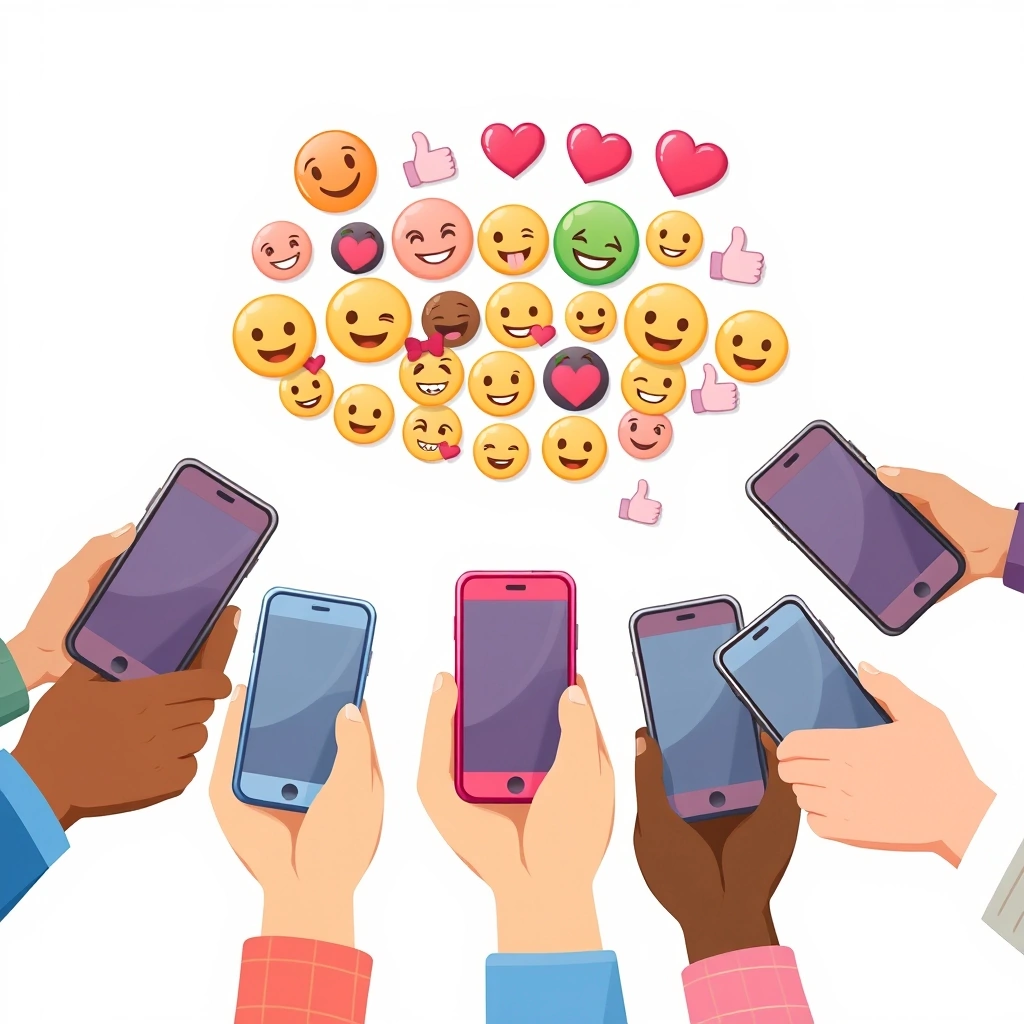
It’s interesting to observe this from the outside, as a quiet member of a chat. You see the tension arise—a missed cue, a slightly too-honest opinion. You can almost feel the other members hesitating, their thumbs hovering over the keyboard. Then, the rescue emoji arrives, usually from one of the more socially attuned members of the group. The chat exhales. The conversation flow resumes, the minor bump in the road smoothed over by a single, pixelated character.
Of course, it’s not a perfect system. The wrong emoji can sometimes add fuel to the fire. But more often than not, in these small, everyday situations, they serve as incredible social lubricants. They handle the tiny fractures in communication before they can become cracks.
When Words Fail, Pixels Speak
This goes beyond just fixing awkwardness. Emojis can proactively prevent it. Prefixing a request with a praying hands emoji makes it feel less like a demand. Ending a piece of mild criticism with a red heart softens the blow and reaffirms the bond. It’s a layer of emotional padding we’ve collectively agreed to use, a shorthand for “don’t take this the wrong way.”
In a way, emojis in group chats are doing the work of body language and tone of voice, but for a crowd. They are the digital equivalent of a gentle nudge, a warm smile across the room, or a sympathetic shrug. They manage the emotional temperature of the room. For more on this delicate balance, exploring how a simple emoji can fix an awkward moment reveals just how ingrained this practice has become.
So the next time you’re in a group chat and you feel that subtle, familiar shift—a slight chill in the conversation—watch what happens. Someone, almost instinctively, will drop in an emoji. A silly one, a heartfelt one, a neutral one. It won’t solve any big problems. It won’t address deep issues. But it will absorb that little spike of tension, letting the comfortable hum of connection return. It’s a small act of digital kindness, one that keeps our online communities feeling a little more human, one tiny picture at a time. This is all part of the wider, fascinating world of emoji and situation, where these small symbols manage our biggest social moments.
We don’t often thank them for it. We just send another one, and keep the conversation going.
📒 Related Blogs
More...The Quiet Comfort of Emojis in Everyday Chats
The Magic of Emojis: How a Simple 😂 Can Turn a Chat from Formal to Fun
The Secret Life of Emojis in Slow Chats: How a Simple Icon Changes Everything
The Neutralizer: How Emojis Keep Work Feedback Professional & Productive
The Secret Life of Emojis: How Our Digital Heartbeats Mirror a Changing World
The Gentle Art of Coordination: How Emojis Soften Work Messages