The Unspoken Clarity: How Emojis Speak Volumes in Quiet Text Threads

Feb 16,2026
You know the feeling. You send a text. Maybe it’s a simple ‘okay’ or a ‘sure, no problem.’ You hit send, and then… silence. The little ‘Delivered’ or ‘Read’ receipt sits there, a tiny digital void. In that quiet, your mind starts to wander. Did they take it the wrong way? Are they upset? Is my ‘okay’ coming across as cold or passive-aggressive? The absence of a voice, a face, a tone—it leaves so much room for interpretation, and often, for worry.
This is the modern dilemma of digital conversation. We’re communicating more than ever, yet so much of the human context is stripped away. The subtle lift of an eyebrow, the soft sigh, the warm smile that takes the edge off a critical comment—all of it is lost in plain black text. What’s left is a kind of emotional braille we have to feel our way through, often in the dark.
And this is exactly where the humble emoji steps in, not as a childish decoration, but as a vital tool for emotional clarity.
The Weight of the Unsaid
Think about the last time you were in a tense or uncertain message thread. Maybe it was planning a tricky event with family, or navigating a slight misunderstanding with a friend. The sentences are careful, measured. Everyone is being ‘fine.’ But the subtext is screaming. It’s in these quiet, high-stakes threads that a single emoji can do the heavy lifting of an entire paragraph of reassurance.
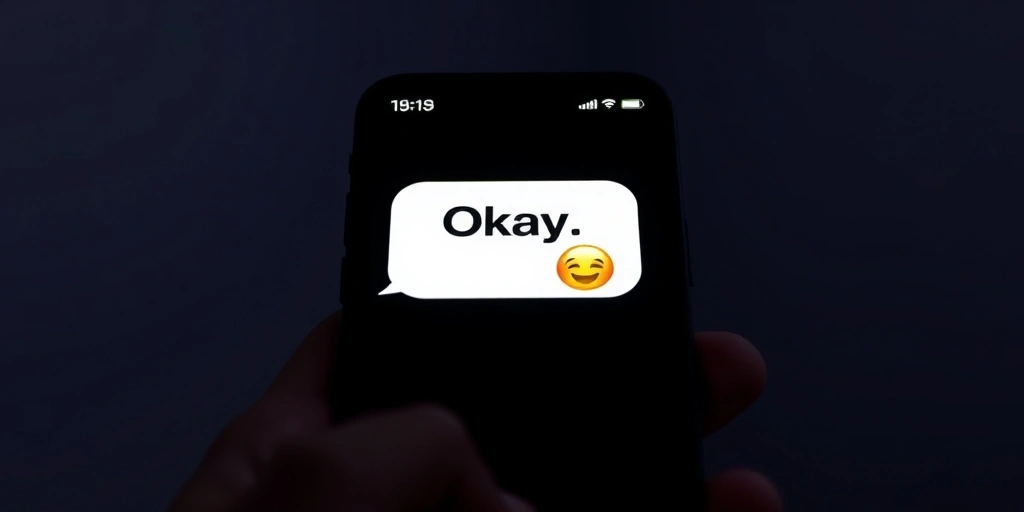
That ‘okay’ followed by a simple 🙂 (smiling face) is a world apart from an ‘okay’ on its own. The first says, “I acknowledge and I’m at peace with it.” The second can feel like a door being shut. The emoji isn’t adding fluff; it’s adding tone. It’s injecting the human warmth back into the coded language of our keyboards.
We use these small signals almost instinctively as a form of emotional self-protection. We’re not just clarifying for the other person; we’re protecting ourselves from the anxiety of being misunderstood. It’s a pre-emptive strike against potential conflict, a way to say, “Please read this in the kindest way possible.”
This practice is deeply tied to how we navigate complex social situations online. The emoji becomes our ambassador, sent ahead to ensure the emotional terrain is safe.
Translating Intent in Real Time
Consider a common scenario: someone cancels plans last minute. Their message might say, “So sorry, something came up, rain check?” The words are polite, but they can feel hollow or even suspicious in the void. Now, read it with a 😔 (pensive face) or a 🤦♀️ (face palm) at the end. Suddenly, the sentiment shifts. You can almost hear the genuine frustration and apology in their voice. The emoji translates their internal state—their intention—into something you can visually, and thus emotionally, comprehend.
It acts as a clarifier for ambiguous language. A sarcastic comment without a 😉 (wink) risks causing offense. A serious suggestion followed by a 😊 (smiling face with smiling eyes) softens it into a friendly idea. In quiet threads, where replies are slow and contemplation is high, these signals are the buoys that keep the conversation from sinking into a sea of misinterpretation.
This is especially powerful in groups or with newer acquaintances, where you don’t have years of conversational history to fall back on. The emoji builds a bridge where there isn’t one yet. For more on how these tiny icons help us handle delicate topics, you might find this exploration of emojis in sensitive conversations really insightful.

The Quiet Power of a Single Symbol
What’s fascinating is that the most powerful emojis in these situations are often the simplest. The ❤️ (red heart) to express solidarity or love after a vulnerable share. The 🤝 (handshake) to signal agreement and respect. The 🫂 (hugging faces) to offer comfort from afar. They don’t complicate the message; they distill its core emotional truth into a single, universal glyph.
This isn’t about having a perfect emoji vocabulary. It’s about recognizing that in the economy of digital attention and emotional energy, these symbols are high-value currency. They close the gap between what we type and what we mean. In the silence after a message is sent, they work on our behalf, coloring the words with the intention we truly feel.
They allow us to be emotionally present even when we’re physically absent, to soothe tensions we can’t physically see. It’s a quiet form of care, embedded in our daily chats. The calming effect of this practice is something we touched on in a piece about how a simple emoji can bring calm to a tense chat.
So the next time you pause before hitting send, feeling that slight unease about how your words might land in the silence, consider the gentle power of an emoji. It’s not a substitute for a heartfelt conversation when one is needed, but in the quiet, ambiguous spaces in between, it can be the small, bright light that ensures you’re both still on the same path, understanding each other, without having to say a thing.
📒 Related Blogs
More...The Secret Power of Emojis in Viral Conversations
Unlock Clarity: How Emojis Transform Quick Chats from Confusing to Crystal Clear
Emoji Across Cultures: Global Meanings & Interpretations Explained
The Little Smiles That Make a Big Difference: Emojis and Casual Fun
The Hidden Language: How Emojis Subtly Shape Your Digital Reactions