The Hidden Language: How Emojis Shape What We Really Mean Online

Mar 24,2026
Think about the last time you sent a simple "okay" in a text. Now, think about sending "okay 😊" or "okay. 😐" or even just "okay." Each one feels different, doesn't it? That's the quiet power of emojis at work. In a world where we communicate more through typed words than spoken ones, these little symbols have become our digital body language. They fill the gap left by the absence of a smile, a shrug, or a raised eyebrow.
Without them, our intent is a mystery waiting to be solved—or misunderstood. A sarcastic comment can land as cruel. A genuine question can seem like an interrogation. We're left reading between invisible lines, often getting it wrong.
The Intent Gap in Plain Text
Pure text is a barren landscape for emotion. It's just you, the words, and the vast imagination of the person reading them. When you write "That's great news," are you genuinely thrilled, passively acknowledging, or subtly mocking? The reader has to guess, and their guess is colored by their mood, your relationship, and even what they had for breakfast.
This is where emojis act as a clarifying spotlight. That same sentence becomes "That's great news! 🎉" or "That's great news. 🙄" Suddenly, the intent isn't just clear; it's broadcasted. The emoji does the emotional heavy lifting, ensuring your tone travels with your words. For more on how emojis influence the feel of a conversation, check out our thoughts on the softening power of emojis.
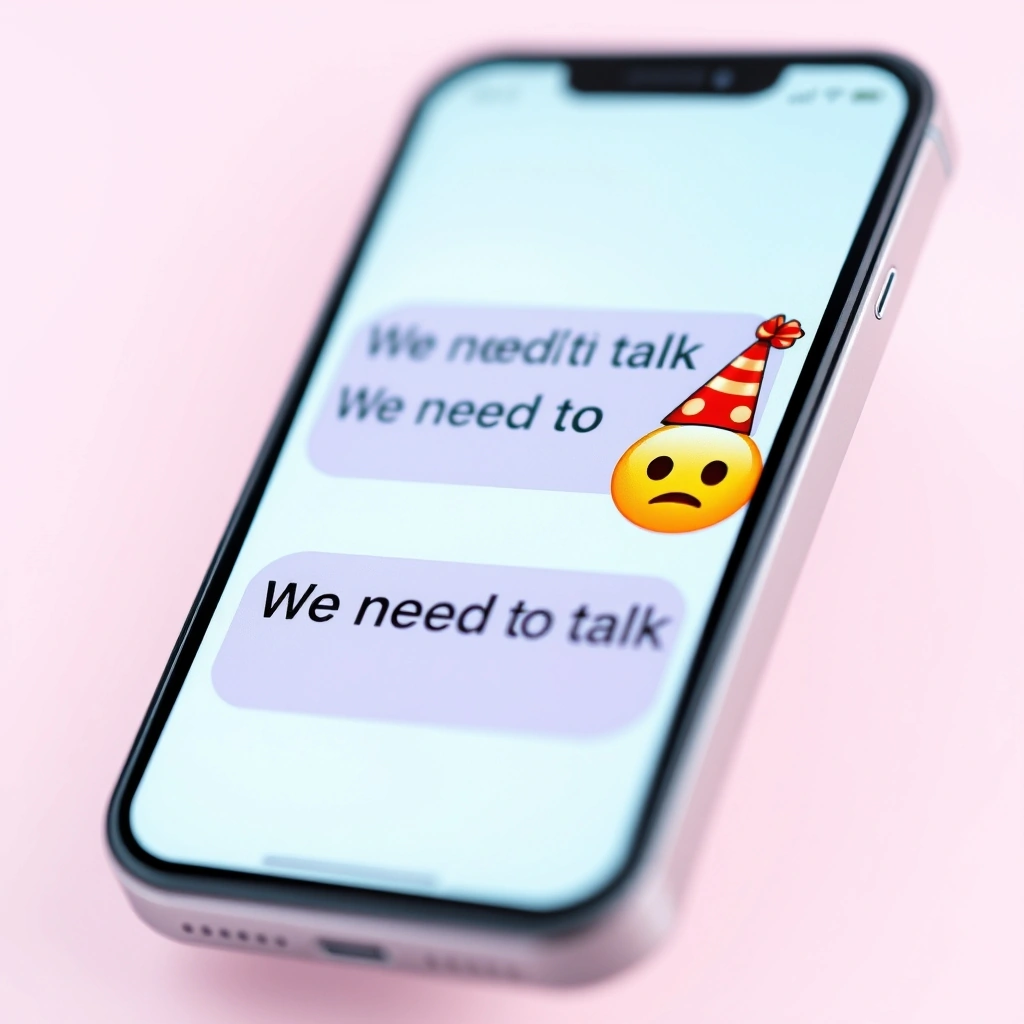
Consider a planning message with friends: "We need to talk about the trip." Sent alone, it might induce a wave of anxiety. What's wrong? Did someone drop out? Is it over budget? But tag on a suitcase emoji 🧳 or a palm tree 🌴, and the entire frame shifts. It's now an excited, collaborative nudge. The emoji didn't change the words; it changed the entire emotional context they were received in.
When a Period Becomes Aggressive and a Winky Face Saves the Day
It's fascinating how the rules of digital punctuation have evolved. To many, especially in casual chats, a period at the end of a short sentence can feel formal, final, or even angry. "Fine." feels stark. "Fine" or "Fine!" or "Fine 😅" each tell a different story. The emoji here acts as a safety valve, releasing the potential pressure of misinterpretation.
This is crucial in delicate situations. A request like "Can you send me that file?" is neutral. "Can you send me that file? 😬" hints at apology for the bother. "Can you send me that file? 👀" adds a layer of playful urgency. The core request is identical, but the relationship context—the *intent* behind the ask—is beautifully nuanced by the symbol.
The Double-Edged Sword of Assumed Understanding
Of course, this new language isn't foolproof. It operates on a foundation of shared cultural understanding. A thumbs up 👍 might mean "acknowledged" to one person and passive-aggressive dismissal to another. A red heart ❤️ carries different weight with a partner versus a coworker. The infamous grimace 😬 can signal awkwardness, sympathy, or even mild regret depending on the conversation.
When this shared understanding breaks down, miscommunication doesn't just persist; it can be amplified because we *thought* we were being clear. We assumed the emoji did the explaining for us. This is why, sometimes, the old-fashioned way is still best: using a few more words to spell out your feeling. The emoji should complement your intent, not be its sole carrier.
Exploring the rhythm of these interactions is key. The placement and choice of emoji can control the pace and feel of a chat, something we delve into in this article on the unseen tempo of emojis.
Building Bridges, One Symbol at a Time
At their best, emojis are tools for empathy. They allow us to inject warmth, humor, and vulnerability into the cold medium of text. They help us say "I'm here with you in this feeling" when miles apart. A crying face 😢 can express shared sadness more instantly than a paragraph. A heart emoji 💛 can offer support without sounding overly sentimental.
They soften directives, making collaboration smoother. They take the edge off feedback. They turn a simple check-in into a moment of connection. In short, they humanize our digital interactions.
So the next time you're about to send a message, pause for a second. Read it back in a neutral voice in your head. What's the intent behind your words? Is it coming through? Could a single, well-chosen emoji bridge the gap between what you mean and what they might read? That tiny icon might just be the most important word in your sentence.
As we continue to live and work through our screens, this visual vocabulary will only deepen. The question isn't whether we should use emojis, but how we can use them more thoughtfully to ensure the person on the other side feels not just informed, but truly understood. The future of clear digital communication might just depend on our willingness to speak this new, heartfelt language. For more explorations on this topic, visit our emoji & communication blog category.
📒 Related Blogs
More...The Emoji Lifeline: How a Simple 😅 or 👍 Can Save a Casual Chat
The Fascinating History of Emojis: From Kaomoji to Global Phenomenon
The Evolution of Visual Language: From Ancient Hieroglyphs to Modern Emojis
The Secret Ingredient to Playful Chats: How Emojis Turn Simple Texts into Fun
The Magic of Emojis: How a Simple 😂 or 😅 Makes Everyday Chats Feel Lighter
Emoji Evolution: The Secret Life of New Emojis and Their Approval Process