The Unseen Cost of a Careless Emoji: How Tiny Icons Create Big Confusion

Mar 02,2026
It was just a quick check-in. My friend had been stressing about a big presentation, and I wanted to send some last-minute encouragement. "You've got this!" I typed, followed by what I thought was the perfect emoji for a mix of excitement and solidarity: the grimacing face 😬.
Her reply came a minute later. "Wait, do you think it's going to be that bad?"
My heart sank. Instead of a rallying cry, my message had been read as a prediction of awkward, cringe-worthy failure. That one little yellow square had completely inverted my intention. This kind of mix-up happens more often than we'd like to admit. In our rush to add color and emotion to our texts, we sometimes forget that emojis aren't a universal language with a fixed dictionary. Their meaning is shaped by context, platform, relationship, and the silent expectations we carry into every conversation.
When Friendly Banter Takes a Wrong Turn
Consider the classic laughing-crying emoji 😂. For many, it's the go-to for signaling something is hilarious. But I've seen it used—and have used it myself—in moments that were only mildly amusing. In a group chat, a friend shared a slightly silly meme. Another replied with a string of five crying-laughing faces. The silence that followed was palpable. The over-the-top reaction accidentally framed the original poster's contribution as try-hard or pathetic, rather than just fun. The emoji didn't match the emotional temperature of the room, and it created a subtle, unintended chill.
This is a common thread in how emojis can miss the mark. They can amplify a sentiment to a degree that feels insincere or even mocking. A single emoji can act like an exclamation point, a question mark, and an emotional filter all at once, and when that filter is too strong, it distorts the entire message.
[[emojilar_img1]]
Then there's the realm of the subtly ambiguous. The smiling face with smiling eyes 😊 is a notorious culprit. Is it genuinely warm? Is it politely dismissive? Is it masking slight annoyance? I've spent minutes staring at that emoji from my boss, trying to decode whether my proposal was accepted with enthusiasm or merely tolerated. The same icon that brings comfort from a close friend can breed anxiety in a professional setting. The emoji itself hasn't changed; the landscape of our relationship defines its meaning.
The Professional Pitfalls
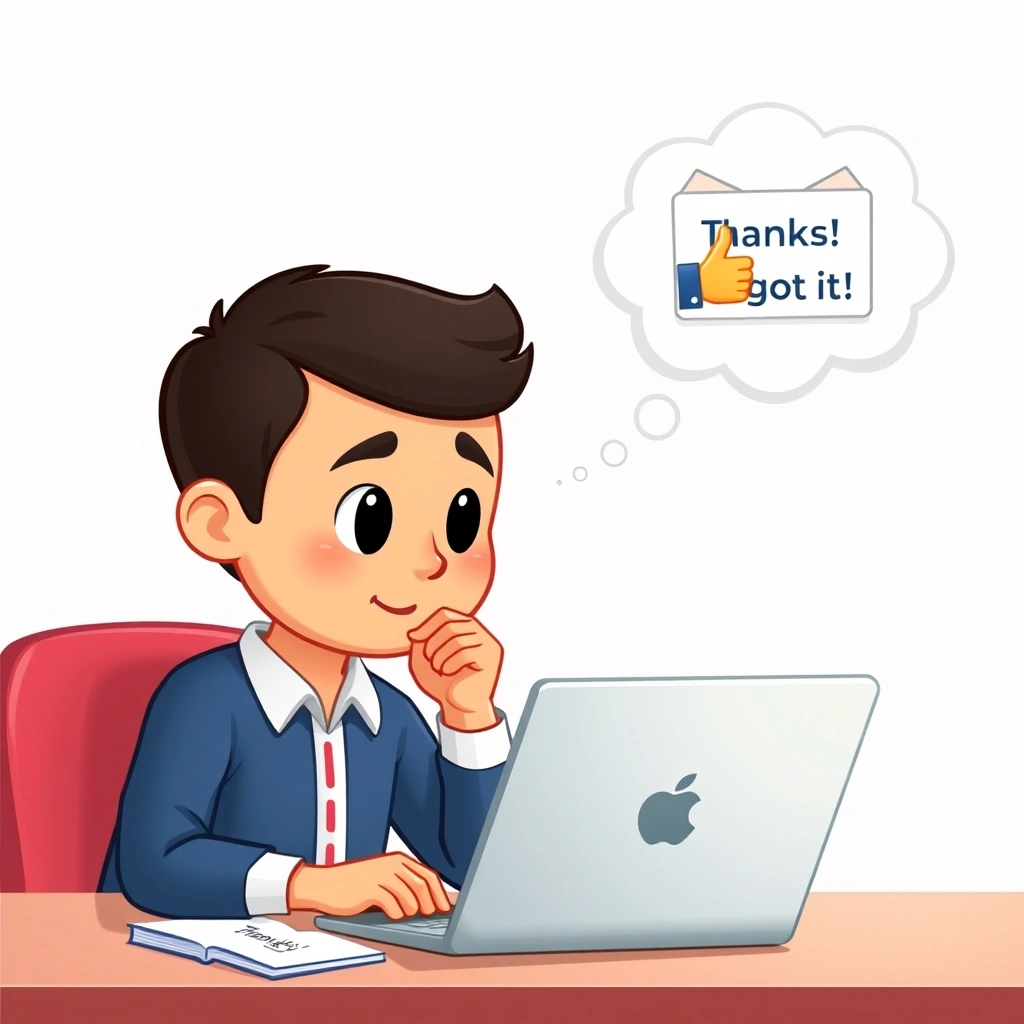
Workplace communication is where emoji confusion can have real consequences. The thumbs-up 👍, intended as a simple "acknowledged" or "will do," can be perceived by some as curt, passive-aggressive, or even dismissive. I once received a project update from a colleague that ended with a thumbs-up. My brain immediately wondered: Are they annoyed I asked? Is this a brush-off? The search for subtext where there likely was none is exhausting, and it's often triggered by a single, well-meaning glyph.
Similarly, the red heart ❤️ has expanded far beyond romantic love, but its boundaries are fuzzy. Is it appropriate to thank a client with a heart? What about a new team member? The risk of creating unintended awkwardness is high, leading many to avoid emojis at work altogether, which then makes communication feel sterile and distant. We're caught between the desire to be personable and the fear of being misread.
Building a Bridge, Not a Wall
So, what's the solution? Abandoning emojis isn't the answer—they add a irreplaceable layer of human warmth to our digital conversations. The key is mindful use. It starts with pausing for a second before hitting send. Ask yourself: "If I received this message with this emoji, how might I feel?" Consider your relationship with the recipient and the context of the conversation.
When in doubt, especially in sensitive or professional situations, words are your safest bet. "That's great news!" carries less risk of misinterpretation than a lone party popper 🎉, which could be seen as sarcastic if the news is only mildly good. You can also use emojis to reinforce words, not replace them. "I'm so sorry to hear that 💙" uses the blue heart to add a layer of compassion that the words alone carry.
It also helps to establish shared meanings with your frequent contacts. My sister and I now know that the grimace 😬 between us means "we're in this stressful thing together," not "this is a disaster." That shared understanding is our private emoji dialect.
Emojis are a powerful, wonderful tool for connection. They're the gestures and facial expressions of our text-based world. But like a real gesture, they can be misinterpreted. The goal isn't to use them perfectly, but to use them thoughtfully—with an awareness that the tiny icon on your screen is landing in someone else's heart and mind, where it might tell a slightly different story than the one you intended to write. For more on navigating the tricky waters of digital expression, explore our thoughts on emoji mistakes and misuse.
In the end, my friend and I laughed about the grimace mix-up. It became a shorthand for our communication fails. Now, when a text feels off, one of us will just send the 😬 emoji alone, and we know it means: "Let's try that again with words." Sometimes, the confusion itself can become a new kind of understanding.
📒 Related Blogs
More...The Evolution of Emojis: From Early Pixels to Global Pop Culture Icons
When Words Feel Too Heavy: How Emojis Carry Our Unspoken Feelings
Emoji Art and Design: Unlocking Creative Expressions Beyond Simple Text
The Hidden Power of Emojis: How They Shape Reactions on Social Media
Beyond Words: How Emojis Secretly Shape What Others Think of You
Emoji Etiquette: Mastering the Unspoken Rules of Digital Communication