The Emoji Trap: Why Our Favorite Icons Keep Getting Lost in Translation

Jan 09,2026
We've all been there, haven't we? You're tapping away, crafting the perfect message, and you drop in an emoji, thinking it’s going to nail the tone. You hit send, lean back, and then… crickets. Or worse, a reply that makes it painfully clear your little icon didn't quite land the way you intended. It's a uniquely modern predicament: emojis, designed to add clarity and emotion to our text-based communication, often become the very source of confusion.
The Great Emoji Divide: When Meanings Diverge
It’s fascinating how something so seemingly universal can be so deeply personal. A smiley face to one person might signify lightheartedness, while to another, it could come across as passive-aggressive or even sarcastic. The context, the relationship with the sender, and even the platform itself can warp an emoji's intended message into something entirely different. It’s like a secret language, but one where everyone has their own dictionary, leading to some truly head-scratching moments. Sometimes, the issue isn't even the emoji itself, but the way it interacts with the words around it, creating an accidental layer of irony or even offense.
Think about the simple thumbs-up 👍. For many, it's a quick "got it" or "sounds good." But in some professional settings, or even among younger demographics, it can be seen as dismissive, curt, or just plain rude. It’s a stark reminder that digital etiquette is constantly evolving, and what was acceptable yesterday might not be today. This evolving nature of emoji perception is a huge part of the emoji enigma, keeping us on our toes every time we hit send.
When Sarcasm Hides Behind a Smile
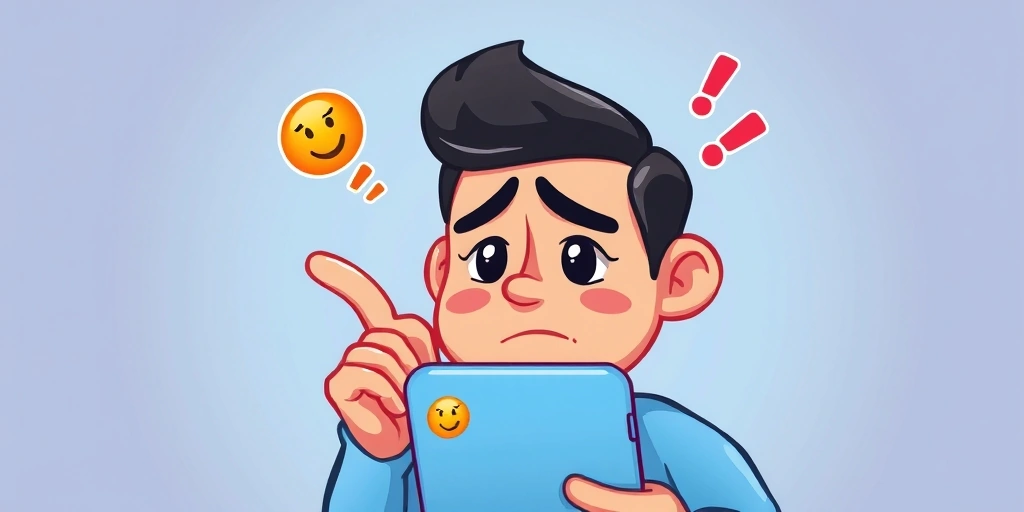
One of the most common pitfalls is sarcasm. We try to convey a knowing wink or a playful jab with an emoji, but without the benefit of tone of voice or facial expressions, it can fall flat. That slightly smiling face 😊 or even the upside-down smiley 🙃 is often deployed to signal irony. However, if the recipient isn't keyed into your particular brand of humor, they might take your message at face value, leading to awkward explanations or, worse, genuine offense. It’s a high-stakes game of emotional roulette we play every day.
It’s also not uncommon for an emoji to completely override the text it accompanies. You might write a perfectly serious sentence, then tack on a crying-laughing face 😂, assuming it conveys lightheartedness, only for the recipient to think you're laughing at them or their situation, rather than with them. It’s a subtle but significant distinction that highlights the power these little icons hold over our interpretations.
Generational Gaps and Cultural Quirks
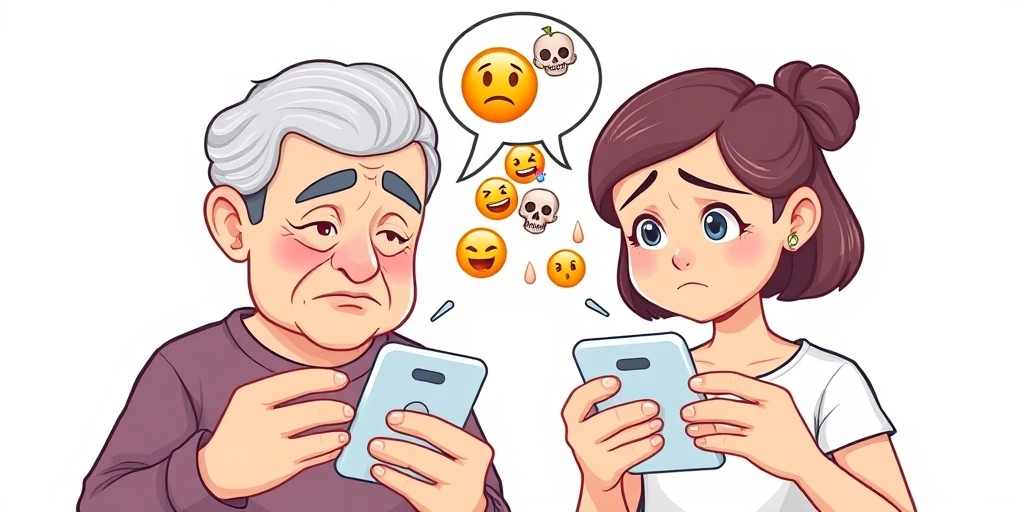
The emoji landscape isn't just about individual interpretation; it's also heavily influenced by age and culture. What might be a standard reaction for a Gen Z user could be completely foreign, or even rude, to a Boomer, and vice-versa. The skull emoji 💀, for instance, is often used by younger generations to express "I'm dead" from laughing or being overwhelmed. To someone older, it's… well, a skull. The disconnect can be genuinely baffling for both parties.
Culturally, the differences can be even more pronounced. The folded hands emoji 🙏, commonly seen as "praying" or "please" in Western cultures, is often interpreted as a "high five" or a respectful "thank you" gesture in others. Imagine asking someone for a favor with a 🙏 and them thinking you're just giving them a virtual high-five! These subtle cultural nuances are a crucial part of the secret language of emojis, and they can lead to significant misunderstandings if not navigated carefully.
The Case of the Ambiguous Purple Eggplant and Peach
Let's not even get started on emojis that have taken on entirely new, often suggestive, meanings beyond their literal interpretations. The innocent eggplant 🍆 or peach 🍑, for example, have become symbols that can instantly shift the tone of a conversation, sometimes intentionally, sometimes accidentally. Using them without full awareness of their dual life can lead to some truly uncomfortable exchanges, especially in contexts where professionalism is expected.
It's not just the 'naughty' ones either. The innocent 'sweat droplets' 💦 can imply something far more adult than just physical exertion. The fire 🔥 emoji can mean something is 'hot' in terms of attractiveness or just plain good. These secondary meanings spread like wildfire through online communities, leaving those not in the know feeling utterly bewildered or, again, unintentionally inappropriate. It really makes you wonder about the broader category of emoji mistakes and misuse.
When Good Intentions Go Awry
Sometimes, the misunderstanding isn't about sarcasm or cultural differences; it's simply about differing interpretations of emotional intensity. A loudly crying face 😭 might be used by one person to express extreme sadness, while another uses it for exaggerated dramatic effect, like "I'm crying because this cake is so good!" If these two people are communicating, one might perceive a genuine crisis, while the other is merely expressing delight. The mismatch in perceived emotional weight can lead to misdirected empathy or, conversely, a perceived lack of concern.
It’s a constant tightrope walk, isn’t it? We crave the efficiency and expressiveness emojis offer, but we also lament their capacity to muddy the waters. The beauty of face-to-face communication, or even a phone call, is the immediate feedback loop. You see a confused frown, hear a hesitant tone, and you can instantly clarify. In text, that feedback is delayed, fragmented, or entirely absent, leaving us to guess and often, to get it wrong.
Navigating the Nuances
So, what's the solution? Is there a universal emoji translator we can download? Probably not, and perhaps that’s part of the charm – the ongoing, evolving puzzle of human communication. For now, it seems like the best approach is a combination of awareness, context, and a healthy dose of caution. Knowing your audience, being mindful of generational and cultural differences, and sometimes, just picking up the phone, might be our best bet against the dreaded emoji misfire. We use them because they add so much to our conversations, but we also have to accept that sometimes, they take away just as much.
📒 Related Blogs
More...Emoji as Emotional Buffers: Navigating Uncertainty with a Single Tap
Emoji Magic: How a Tiny Icon Changes Everything in Your Group Chats
The Fascinating History of Emojis: From Kaomoji to Global Phenomenon
The Pulse of the Digital Age: How Emojis Mirror Our Collective Moods Online
The Psychology Behind Emojis: Unlocking Our Digital Emotions
The Quiet Sigh: How Emojis Express Disappointment When Words Feel Too Risky